The answer to your query depends upon the meaning of kpc in the scale at the bottom left. If it is an abbreviation of kiloparsec, then we cannot with NGC 4546, but if it stands for kaboom projection covered, then it’s probably a splodeydope.
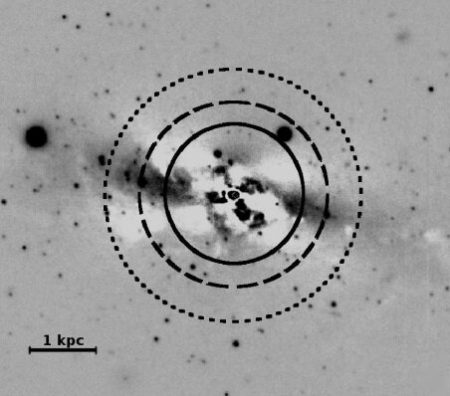
At first glance, I see by the measured photometry of 350 globular cluster candidates in NGC 4546, from the integrated color distributions, their density profiles and azimuthal distributions, that the total population of GCs in the galaxy is about 390, assuming that a maximum length of the galaxy’s GC system is 163,000 light years.
On second thought, I think I can see a ducky and a horsie.

Nazis,
I see Nazis.
Yep. Obviously. Connect the dots, people!!1!!
The answer to your query depends upon the meaning of kpc in the scale at the bottom left. If it is an abbreviation of kiloparsec, then we cannot with NGC 4546, but if it stands for kaboom projection covered, then it’s probably a splodeydope.
Kiloparsec? How many of those in the Kessel run?
It’s obviously an old TV test pattern from the nineteen fifties.
Looks like range day with one flyer.
Then the kids peppered it with a .22.
At first glance, I see by the measured photometry of 350 globular cluster candidates in NGC 4546, from the integrated color distributions, their density profiles and azimuthal distributions, that the total population of GCs in the galaxy is about 390, assuming that a maximum length of the galaxy’s GC system is 163,000 light years.
On second thought, I think I can see a ducky and a horsie.
What your body actually looks like when Scotty beams you up.