Gimme a “K”

AndroidKitKatThe new Android operating system has been announced. Android 4.4 will be … KitKat. Really.

In case you didn’t know, or just weren’t paying attention, Google names its Android operating systems after snacks, and in alphabetical order. Mostly.

One source says that after the first Android OS, the next release, version 1.1, was codenamed “Petit Four,” which is some kinda French snack cake, but that name isn’t officially listed by Google.

Since then, though, the third one, Cupcake, began the alphabetical snack release: Cupcake, Donut, Eclair, Froyo (frozen yogurt), Gingerbread, Honeycomb (for tablets only), Ice Cream Sandwich, Jelly Bean, and now, KitKat.

Word is that originally, the latest release was going to be Key Lime Pie. Why? Cnet reports:

…”We realized that very few people actually know the taste of a Key lime pie,” said John Lagerling, Android’s director of global partnerships. The flavor of Kit Kats, he said, is more familiar to programmers than Key lime pie…

Seriously? Programmers don’t know what Key Lime Pie tastes like? While, sure, it’s a southern dessert, I’m just stunned that it’s an unfamiliar taste.

What foods with “K” would programmers know about? Ketchup. Krispy Kreme. Kraft Macaroni & Cheese. Kool-Aid.

Wait. Scratch that last one. I think us iOS users drank all that.

Any good “K” foods that Android should’ve used? Whaddaya think?

Tech Toys: Chromecast (Part 3)

GoogleChromecastI’ve written about the Google Chromecast before. Actually, I’ve written about it a couple of times. My impression of it has gone from “Well, isn’t that cute” to “This is a decent device.”

If you already have an Internet streaming solution for your TV, it doesn’t bring a lot to the table, but it brings some stuff.

If you have a Mac (mid-2011 or later) and an Apple TV, it brings nothing. But, if you have a Windows computer (most do), this helps you send content from your browser to your TV screen. For instance, sister-in-law and nephew really like Breaking Bad. They also recently dropped satellite service. The only way to watch the new season of Breaking Bad would be to buy it from Amazon or watch it on the computer. That means huddling around the computer (which is what they did) or running a cable from the computer to the TV.

Or, use a Google Chromecast device.

This isn’t new; I covered a lot of this before. I also mentioned that it could replace my Xbox 360 (which I only use for ESPN3 content) … and it has; I’ve already boxed up the Xbox.

So, what’s new? Well, I did some research into how useful the Chromecast would be for watching TV. Say you don’t have any streaming device: no Roku, no Apple TV, no Xbox 360 (with Live Gold account).

Say you’re looking to drop cable or satellite, and wondered if the Google Chromecast is a streaming option. (Keep in mind, you have to use your smartphone, tablet, or computer to control it.)

Well, here’s the answer: Maybe.

I looked at the top 10 shows for both broadcast and cable for the last week. I used Nielsen’s latest ratings. The top 10 shows were:

Broadcast

  1. Under The Dome (CBS)
  2. America’s Got Talent (Wed) (NBC)
  3. The Bachelorette (ABC)
  4. 60 Minutes (CBS)
  5. America’s Got Talent (Tue) (NBC)
  6. The Bachelorette: After the Final Rose (ABC)
  7. NCIS (CBS)
  8. Unforgettable (CBS)
  9. The Big Bang Theory (CBS)
  10. Big Brother (CBS)

Cable

  1. Rizzoli & Isles (TNT)
  2. Breaking Bad (AMC)
  3. Major Crimes (TNT)
  4. Pawn Stars (HIST)
  5. Pawn Stars (HIST)
  6. NASCAR Sprint Cup (ESPN)
  7. WWE Raw (USA)
  8. Love & Hip Hop Atlanta (VH1)
  9. WWE Raw (USA)
  10. American Pickers (HIST)

How did Chromecast fare? Better on broadcast than cable. The only top 10 broadcast show that you couldn’t stream was #1 Under The Dome. If you authenticated with a cable/satellite provider, you could watch it, but for a cable/satellite replacement, the Google Chromecast won’t handle that show. Yes, if you have an Amazon Prime subscription, you can watch it on your computer, but you can’t stream Amazon content to the Google Chromecast unless you have Silverlight disabled. You see, Amazon uses Silverlight by default, but if that’s disabled, will fallback to Flash, which can be streamed via Chromecast. Most other stuff will stream to Chromecast.

For the cable shows, all of the TNT content require authentication with a provider. One of the History Channel shows — American Pickers — did, but one — Pawn Stars — didn’t. The WWE wrestling show on USA is only available via Hulu Plus. Yes, you can stream Hulu Plus (as well as the free Hulu stuff) to Chromecast. So, this content a mixed bag. You don’t need cable, but you need a different subscription service. Kinda like Under The Dome required.

The ESPN show is a live sports event, and I don’t know if it was available live. Probably not, unless authenticated. Anything that airs on ESPN, ESPN2, or ESPNU will require authentication. ESPN3-only content works fine, as long as you remember to open the content in a tab and not a pop-up window. Live sports is one of the drawbacks to the Internet streaming TV setup; you don’t get much live sports.

The rest of the top 10 cable shows all played from legal, free online content Websites. So, mixed bag using Google Chromecast as a cable/satellite replacement. As a supplement, it’s great. Or, for me, as a supplement to Roku & Apple TV, it works fine.

Why do I focus so much on this kinda stuff? I like it. A lot. And, it’s saving me some money. If you’re looking at ways to save some money by eliminating or lowering a bill, TV is a way to do that. Xbox, Apple TV, Roku, and Chromecast are some ways I’ve tried. They all work to varying degrees. Nothing is a full cable replacement. But, for the money I’m saving monthly, what I lose is worth the trade-off.

Tech Toys: Chromecast (Part 2)

GoogleChromecastRecently, I mentioned getting a Google Chromecast and said that I might not keep it. Not that it’s not a good device, but that it doesn’t bring a lot to the table.

I’m rethinking that. So, I’m gonna tell you why, but also mentioned another set of issues that, if you’re thinking about one, you might want to keep in mind.

First, why I’m thinking about keeping it: ESPN3.

Sure, it also allows the viewing of Hulu standard/free content on your TV — remember, this device allows you to extend a browser tab to your TV screen in addition to your computer screen — but I really don’t like the idea of using a computer to watch TV.

Two years ago, I bought an Xbox just for the purpose of watching ESPN3. No Xbox video games, just for watching ESPN3. Only, that means a yearly subscription to Xbox Live Gold, which is $60/year (yes, they are on sale from time to time). And, renewal is coming up within a month.

So, for a $35 one-time cost, I can replace my Xbox and its $60 yearly cost — and not have to have wires/cables strung across the room for using the computer. So, Google Chromecast does bring that to the table. And I’m now thinking that’s enough. The Xbox will be retired, and the Chromecast will take that slot.

Now, a warning.

I saw another person using Google Chromecast and experiencing some issues. They show they were streaming was not smooth. It was slightly stuttering. Looking at the stream through the computer, not streaming it to Chromecast, everything looked fine. But streaming introduced the jumpiness. Audio was fine, just the image.

I didn’t have those issues, but I’m using a different computer. Mine’s a 2.66 GHz Intel Core i7 with 8 GB of RAM. Even three years old, that’s not a bad computer. I don’t know the specs of my friend’s computer, but it’s a recent Windows 8 machine. I don’t know the processor or the speed, and there wasn’t time to do proper diagnostics beyond seeing that only half the RAM was in use when streaming from the browser to the Chromecast. CPU usage, though, was at around 50% when watching in the browser, but 99% when streaming to the Chromecast.

I’ve looked at the Chromecast Website and can’t find recommended specs for a computer to stream to the device. I finally found the minimum system requirements: For Windows 7 or 8, a Core i3 or better is required for a good stream. So, here’s a warning. While you don’t need the top of the line computer to use it smoothly, a lower-end PC might not be able to do the job optimally. Yes, my friend’s computer was able to stream, but the jumpiness of the image was noticeable.

If you’re looking to get into streaming content to your TV, the Google Chromecast is a good option — and at $35, it’s cheap. Just be aware that some perfectly good computers may be otherwise underpowered for optimal use.

Tech Toys: Chromecast

GoogleChromecastGot a new toy this week. It’s the Google Chromecast thingy. I haven’t spent the entire week evaluating it; I have another project going on that’s taking up a lot of time, but I did manage to get a good test of the Chromecast.

Now, just as a reminder, I do the Internet TV thing. Though I do have an antenna, I don’t have cable or satellite, and most of my TV viewing is via the Internet. Not on my computer. There are lots of people that do that. I think Frank J. does. I don’t use a computer; I use other devices to get content to my TV. I use Roku, Apple TV, TiVo, Simple.TV, and Xbox 360. Do I need all that? No. Nobody needs all that. But I got it anyway. Mostly because I felt like it. Or, I wanted to try something out and kept it.

That’s where I am on this new toy. It’s called Google Chromecast and it’s a slightly different take on things.

While the other devices primarily make connection with the streaming services (Netflix, Hulu Plus, Amazon, iTunes, and so on) the Chromecast doesn’t. It allows your TV to receive a stream from one of your other devices, like a smartphone, a tablet, or a computer. And, I’m gonna tell you my thoughts about it.

It works.

Okay, maybe I need to say a little more about it. Well, it’s a simple little device. You can click the image at the top and get an idea of how big it is. Or little.

It plugs into an HDMI port on your TV, and you can use your computer browser, or a smartphone or tablet to set it up. Now, you can’t set it up using a Kindle Fire. At least, I couldn’t. Most other Android-based tablets will work, though. You can use an iPhone or iPad. There’s an app for it. Or, you can use your computer and the Chrome browser.

The box comes with simple instructions on how to set it up. You can simply plug it in, attach the power cord, and set your TV on the HDMI port and the instructions will appear on the screen. Do exactly what they say and you’ll be just fine.

About that power cord. You can use the included wall wart power adapter, or if your TV has a USB port (not a service port, but one labeled “USB”) that will power it. Be advised of one thing: on one TV I tried it on, the power saver feature turned the USB power off after a while, meaning I had to remove it and plug it back in. Using the wall wart solved that. Your TV may not do that, and using the USB port keeps things tidier.

The good: It works. Using the Netflix app on iPhone and Kindle Fire, or the Netflix Website using the Google Chrome browser, a “Play On” button appears that lets you send the output to the Chromecast. And, that means it plays on your TV, both picture and sound.

Right now, Netflix, YouTube, Google Play, and Google Chrome are the only apps that will send content, but that actually covers a lot. I was able to send Hulu content using the browser. Not just Hulu Plus content (which is all Roku, Apple TV, and other set-top boxes support), but also Hulu standard free stuff. The stuff you can’t watch on set-top boxes. And, you can send a lot of stuff via the browser, so in that respect, it works pretty well.

Also, if I send an app from my tablet to Chromecast, say Netflix, I can still check email such. There may be something that will interfere, but so far, I haven’t run into anything.

The bad? Well, it doesn’t do true mirroring. For instance, using Apple TV and a Mac from the last two years, you can mirror your desktop on your TV. With Chromecast, you can send content from a browser tab, but that’s about it. There is no full desktop mirroring with Chromecast.

The other thing is the fact that I have to have a separate device. That is, it’s not that I can send stuff from my browser, my phone, or my tablet, but I have to; that’s the only way I can get content to it. With Roku, Apple TV, or such, I don’t have to break out my phone or tablet; those set-top boxes connect directly to the streaming source.

Oh, and not every streaming source works in the browser. Amazon Instant Video, for instance, doesn’t work well at all unless you have disabled Silverlight. Using the default Silverlight plugin, I can mirror the browser tab, but there’s no sound, and full-screen simply does not work. So, it’s either not fully baked, or it’s not fully supported. Using Flash, it streams fine.

Still, for the price ($35) it’s a pretty good setup. It’s a cheap way to start watching streaming content on your TV, without having to string wires across the room.

Will I keep it? Maybe. I don’t know. I already had all the HDMI ports used with other stuff, and I had to unplug something to try this out. So, I’ll either use another input for something, or I’ll box the Chromecast back up and give it to one of the children. (Hey, kids, if you’re reading this — and you’re not; it’s not cool to get caught reading your parent’s stuff — the first one of you to ask for it gets it.)

Would I recommend you get one? Well, I won’t recommend you don’t. It does work well, and the price is nice.

It won’t replace a Roku, or an Apple TV. But, it will supplement one. Or, it will work as an initial step into the world of Internet TV. As more apps come out, it may be good enough.

So, recommend? I won’t give an enthusiastic yes, but I will give a yes.

Slinging things off the planet

DennisTheMenaceA couple of years ago, we talked about drug smugglers using catapults to fling marijuana into the U.S.

At the time, we suggested using catapults to throw stuff out of the U.S. Well, it turns out that a company in Virginia is wanting to do more than that. They want to use slingshots to throw stuff off the planet. No, I’m not making this up.

It’s a Kickstarter project, called the Slingatron. Only, it calls itself a “railroad to space,” but it uses more of a slingshot concept than a railroad concept.

I’m not talking your Dennis the Menace kinda slingshot. I’m talking your David kills Goliath slingshot. The kind that goes around and around then is released with a FTHHPPTT!

Will it work? I dunno. But, I’d like to see it throw something off the planet. Or someone.

Let’s start with Barack Obama. Next, Joe Biden. Then, Obama’s cabinet. Follow that up with the Democrats in Congress, and then the people that voted for them.

I’m thinking once we do that, we’ll have worked out all the bugs, and the Republicans will get the idea that we don’t mind tossing folks off the planet. Maybe they’ll straighten up and act right.

And, if they don’t, we’ll still need to test it some more, just to make sure it’s working.

But, that’s just my suggestion. Who do you suggest we test this thing on? Who would you throw off the planet?

Jetman

AstroBoyYou know about Jetman, right? In case you don’t, Jetman is some Swiss dude names Yves Rossy who wears a jet.

No, this isn’t some silly cartoon character. Or a Robert Downey, Jr. movie about some silly comic book character.

This is a real thing, where the fellow straps on wings and jet engines and flies around.

Jetman is in Wisconsin this week, and was flying around at the AirVenture show in Oshkosh. He flew around next to a B-17, and had some other stuff scheduled. Sounds like fun.


[Direct link: CBS]

What use can we make of this technology?

Well, it could be a James Bond thing. Or could have been. I could see Sean Connery’s James Bond doing this; he wore that Jetpack in Thunderball. I can see Roger Moore’s James Bond doing this; he flew that little Mr. Bean-looking jet in Octopussy. Maybe even Pierce Brosnan’s Bond. Not so sure about that new guy, though. Is this the kind of thing Daniel Craig’s James Bond would do? I don’t know. He just doesn’t strike me as a throw-on-a-jet kind of fellow. Maybe I’m wrong.

So, if not a James Bond gadget, what good is it?

Well, if we put laser beams or rocket launchers on it, we could use it to shoot laser beams or launch rockets at things. Other than that, I got nothing.

So, help me out here. What would you do with a Jetman outfit? What use could we make of this technology?

Phone-shopping time

ToyPhoneAfter Apple introduced the iPhone in June 2007, it really took off. It was a sensation. The only drawback at the time was that only one U.S. carrier, AT&T, carried the phone. Now, all the major carriers and many smaller carriers offer the iPhone.

When Android phones came out in 2008, they expanded the market more than took away iPhone sales. Me, for instance. I eventually switched from a BlackBerry to an Android phone. I was with Verizon, and, at the time, Verizon didn’t carry the iPhone, so, if I wanted one of those fancy phones, an Android phone was the best option.

Today, the iPhone is the top-selling phone. Now, before you get your panties in a wad, hear me out. It’s a matter of statistics, which can prove anything if you play with the numbers enough.

In the most recent numbers, iPhone has 39.2% of the market. While Android phones have 52.4% of the market, that’s spread across Samsung (23%), HTC (8.7%), Motorola (7.8%), LG (6.7%), and others (6.2%). So, iPhone is still the top-selling phone.

Now, as for operating system, Android is tops. But not really. There are a slew of Android operating systems. I’m not talking the skins the manufacturers put on top of the OS, I’m talking the actual underlying OS.

Apple’s iOS has 39.2% of the market, but there are different versions of iOS. The top is also the latest: iOS 6 is on 92.7% of devices. That works out to 36.3% of smartphones running iOS 6. And, that’s the top of all mobile operating systems.

Combined, all Android operating systems account for 52.4% of the market, but the leader is Jelly Bean (4.1.x, 4.2.x; API 16 & 17, respectively), which accounts for 37.9% of Android installations. That works out to 19.9% of smartphones running a version of Jelly Bean. That’s just over half of the number running iOS 6.

So, the actual top phone is Apple’s iPhone, and the top operating system is iOS 6.

What brought all this up? Well, I upgraded a phone a little over 18 months ago. At the time, Verizon was doing the 20-month renewal thing. So, 20 months will be up in early September. That’s six weeks away. I’m beginning to seriously think about a replacement for my iPhone 4. So, I decided to look at what others are using. And, those statistics tell me … it’s a strange market. Number two is number one and number one is number two and it’s just a big old jumble.

I don’t expect to change carriers (I’d have to wait for January for that, and I’m not unhappy with Verizon), so I’ll likely renew with Verizon. So, which phone to get?

Another iPhone? (I do like the iPhone. I really do.) Or, is there a reason to go back to Android?

Yes, I have an Apple computer, but I rarely sync my phone to my computer. With iOS 6, it’s really not necessary anymore.

I have an Apple TV, but I never use AirPlay to send phone content to it. I also have a Roku, so if I did want to send content to the TV, I could use Roku with an Android device for that.

I have an iPad (older first generation), but I also have a Kindle Fire (Android-based).

So, yes, I’m in the Apple ecosystem, but I’m comfortable outside it, too.

Truth be told, I’m leaning toward a new iPhone. Which I’d be happy with. But, I’m open to other phones. Tell me what you like about your Android phone. Or, your Windows phone. Or your BlackBerry. Okay, I’m just kidding about the BlackBerry.

But really, I’m curious about these Galaxy Maxx One phones, or whatever they are. I’m open to suggestions.

Suggest.

Over-thinking with technology

Video screenshot by Amanda Kooser/CNET

Video screenshot by Amanda Kooser/CNET


The nice people (I assume they’re nice) at DDB in Singapore have come up with a urinal system that tests for alcohol and records if you’re drunk. According to Cnet, it’s a system that involves getting an RFID card when you park:

Club-goers receive an RFID parking pass when they drop their cars off at valet. A device sitting in the urinal measures alcohol levels. An RFID reader near the urinal picks up each person’s parking pass. If the urine clocks in above the legal limit, a sign at eye level suggests calling a cab to get home and the system takes note.

When the partied-out patron goes to retrieve his car, he has to hand his RFID parking card over to the valet. The valet scans it and an alert pops up if the customer tested high on his urine.

Nice plan. Except for one detail.

You see, around here, I’ve found that many drunks don’t always urinate outside their pants. That means we can usually tell without an RFID card.

Sorry to burst your bubble, guys, but them’s the facts.

Maybe you can sell it to Obama’s NSA. I’m sure they’ll find a use for it. Maybe they’ll make them required equipment on those low-water flush toilets you have to buy.

Robot Snakes

RobotB9They’ve gone and invented Robot Snakes. That’s not the 21st century I was looking forward to.

You see, when I was a child, I remember the robot from Lost In Space. That was a cool robot. There were other robots on TV and in movies. Robby the Robot from Forbidden Planet, who also played a robotoid (whatever that was) on Lost In Space, was popular with many people.

In books, the robots of Isaac Asimov were pretty cool. And, maybe the Tin Man from The Wizard of Oz was a robot. There was the chick-bot in Metropolis with the metal boobs. The gorilla in the diving helmet from Robot Monster. And, that reminds me of Tom Servo and Crow T. Robot of Mystery Science Theater 3000.

I could go on and on, but the point is, we all saw a lot of robots over the years. Every kind of robot imaginable, right?

Wrong.

In January, I told you about the vomiting robots. Last month, we found about about the robot monkeys. Well, somebody has topped that. A bunch of folks from Carnegie Mellon University — do we know anybody from there? — have built robot snakes.

Yes, that’s right. Robot snakes. Frikkin’ robot snakes.

Really. It’s not a plot to a movie on SyFy. It’s a real thing and not some Tiffany, Debbie Gibson, LL Cool J, Eric Roberts movie.

So, maybe you’re thinking, hey, that’s cool. They’ll be able to snake their way (get it?) through some really difficult to reach places and, I don’t know, do robot stuff.

Sure. And guess where they’re deploying them? Nuclear plants.

That’s right. We’re soon going to be overrun with giant mutant radioactive robot snakes.

I think I’d rather deal with Tiffany and Debbie Gibson. Of course, that’s probably true about most things.

Restructuring Microsoft

ClippyAccording to reports, Microsoft will unveil its new restructuring on Thursday.

The one-time tech leader is looking to change its form into something better suited to today’s environment. But just what will those changes entail?

I’m thinking they’ll split into two major division: Stuff That Works and Stuff That’s Crap.

The Stuff That Works will continue to support the Xbox 360, the Microsoft Mouse, Microsoft Surface Pro, and Microsoft Security Essentials.

The Stuff That’s Crap division will encompass Microsoft Windows, Microsoft Surface RT, Xbox One, and just about everything else.

Products and services like Microsoft office, which are currently slated for the Stuff That’s Crap division could wind up in Stuff That Works, but that’s still uncertain.

Now, will Microsoft really do this? Well, they already have. At least, that’s how I’ve thought of there stuff for years. On Thursday, they have the chance to make it official.

Will they? Probably not.

Will the restructuring work? Are you kidding? The people that brought you Clippy, Microsoft Bob, the Zune, and the Ken? What could possibly go wrong?

Update to plugins

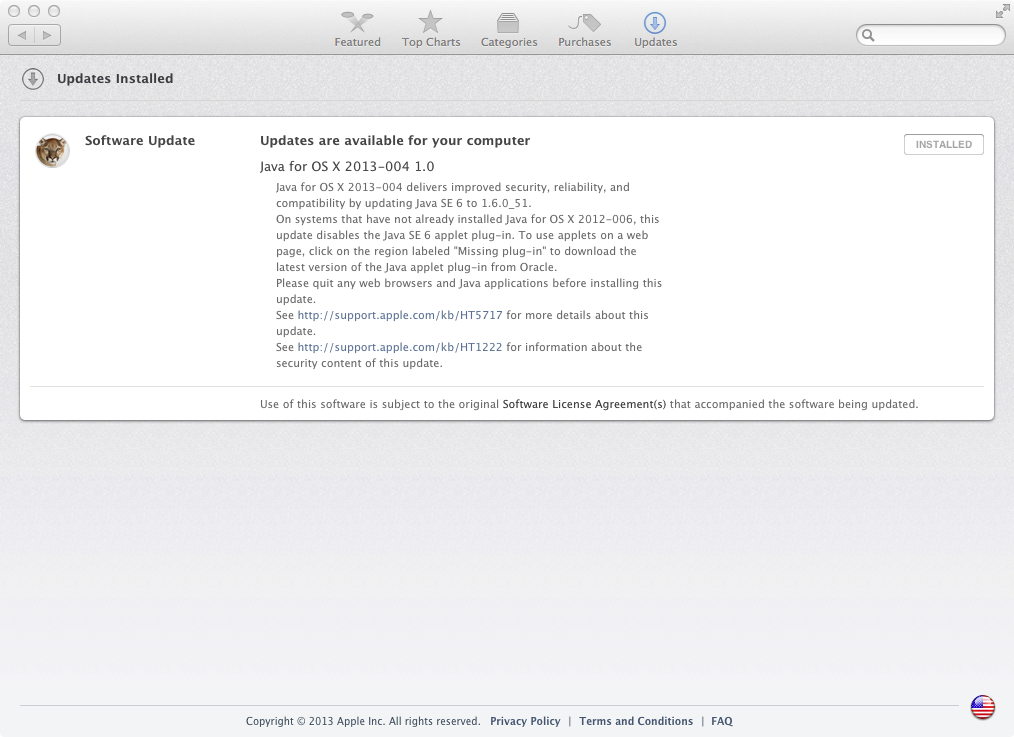
JavaUpdateI got an update for my computer. From Java.

I am so over Java. I’m beginning to not have bad feelings about Microsoft, that’s how so far over Java I am.

And Adobe. Oh my goodness.

Every time I turn around, there’s another update for Java or for Adobe. When are these people ever gonna get it right?

Sure, updates are needed from time to time on anything. But, when the update is an improvement to functionality, that’s one thing. But constant security updates? That’s crazy.

Don’t turn this into a Windows vs OS X vs Linux vs whatever debate. The problem I’m talking about isn’t the operating system. You see, these Java updates? They happen on all the systems. Adobe updates? All platforms need them. Oh, yeah, there are others, but these are the two I see the most on varying systems. And, more often than not, it seems, it’s a security update.

That makes me wonder: how secure are we?

Why do we need all these plugins anyway? Why couldn’t Microsoft or Apple go ahead and include that functionality in the operating system to begin with? Well, they do. Only, they aren’t compatible.

If you’re running Windows, Microsoft included support for WMV files: Windows Media Player. If you’re running OS X, Apple included support for MOV files: QuickTime. And, out of the box, they are incompatible. Sure, you can get plugins to play WMV files on OS X and plugins to play MOV files on Windows, but there we go with plugins again. It’s not core OS functionality.

Then, we all get caught up in things like Java or Adobe products. But Java, after all its original hype and promise turned out to be nothing more than a way for hackers to get into your computer. Well, maybe it’s more than that, but it’s certainly opened many computers up to nefarious individuals.

Flash is the same way. Though Flash didn’t originate with Adobe, Adobe bought out Macromedia and added Flash to its stable of unstable products. And Flash, while not as vulnerable to outsiders as Java, will beat your system’s resources to a pulp, eventually locking it up or causing you to reboot before it does.

Flash is the devil. As is Java. And we invited them into our homes and onto our computers.

Say what you will about Apple, their move to reject Flash on their mobile devices (iOS) was eventually followed by Android (latest two versions). That means that the vast majority of mobile devices won’t play Flash content. And, as older versions of Android (that do support Flash) are replaced by current versions, the percentage of Flash-enabled mobile devices gets smaller and smaller. And that’s a good thing.

Flash and Java are like Obamacare: they promise great things, but really can’t deliver on those promises. Or, when they do, the cost is too great.

Maybe I’m just getting old. Or even more old. I think I’ll go yell at the kids to get off my lawn. And for Java and Adobe to get off my computer.

Falling Skies: To buy, or not to buy?

Nothing political here, just a question. It’s about that TV show on TNT, Falling Skies. It had the third season premiere last night, and I’m wondering when I should watch it.

Let me pause for a moment and let you know my situation. A couple of years ago, I dropped cable. I watch TV over the Internet, mostly using a Roku, but I also get content via Apple TV and Xbox. I can also watch or record over-the-air (OTA) content using Simple.TV (it plays through Roku), but I generally use services like Hulu Plus to watch current content, even if it’s also OTA.

And that’s the problem. As much money as I’m saving by using streaming services rather than cable or satellite — and I’m saving a lot — the downside is that shows that aren’t OTA or included in Hulu Plus, well, I have to buy those a la carte. Or wait a while to watch them. Keep in mind that even using pay-as-you-go (PAYGO) for current content, I still pay a lot less for TV than I did in 2010.

Some people, Frank J included, use a computer to watch TV. That home theater personal computer (HTPC) approach works well enough; in fact, some prefer that setup. I’m one of those that doesn’t. I’ve tried it, and I’ve tried other devices, but, for me, I’ve limited myself to using my three set-top boxes.

I realize that this means I’ve put some limitations on myself, and could solve things by removing those limitations. But, honestly, I don’t want to. I’m aware of the limitations, and have decided to go the way I’ve gone for cost and simplicity. I’m at the balance I want, insofar as ways to watch TV. That may change, as technology changes, but for the foreseeable future, I’m using Roku, Roku/Simple.TV, Apple TV, and Xbox.

Those limitations also mean I have to make some choices. And I’m asking for input so I can make a choice.

Last year, I finally watched Falling Skies. I had already dropped cable by the time it premiered on TNT, and never got around to checking it out. I’m an Amazon Prime member. That means that, not only do I get better shipping terms, I get a shipload of TV and movies available for streaming to my Roku and Xbox, as well as to my mobile devices.

Falling Skies is one of those shows. I watched the first two seasons, and am looking forward to the new season, which actually began last night.

Since I don’t have cable, I didn’t see the show. Now, I have a couple of choices: I can buy the season for $1.89 (SD) or $2.84 (HD) an episode. That means, for the full 10-episode season, it would be $18.90 – $28.40.

Now, if I wait until late in the year, it’ll be available for a discount of around 25-40% off. And, if I wait until even later, it’ll likely show up on Amazon Prime.

So, I can buy shows now, buy shows later at a discount, or wait several months and watch them all for no extra money.

Did you see the episodes last night? Were they great? Did they suck? And, if they were great, should I go ahead and pony up the money to watch the shows?

Whaddaya think?

These are not the doctors you’re looking for

Calling Dr. Killbot

Robots have been in the news lately. There’s a robot that’s been operating on people, and killing some of them.

I know. You’re thinking that the Three Laws won’t let that happen. Well, guess what? The Three Laws are just fiction. Killer medical robots are real.

There’s an AP report out of Chicago that tells of one busy robot:

… a million-dollar, multi-armed robot named da Vinci, used in nearly 400,000 surgeries nationwide last year …

Did you know that? Some multi-armed robot has been doing surgery all across the country, at the rate of over 1,000 a day.

And, if that’s not enough, it’s a killer robot:

… the high-tech helper is under scrutiny over reports of problems, including several deaths that may be linked with it …

If I had told you when Congress was getting ready to pass Obamacare that in 2013, we’d have killer robots operating on people, you’d’ve said I was a right-wing nutcase.

Yeah, well, the Associated Press backs me up. We got killer robots playing doctor. And not in the fun way.

You thought all you had to look out for was drones. But now you have to be wary of multi-armed killer medical robots.

If I were you, I’d play it safe and avoid all multi-armed robots. For a while, at least.

Simple.TV vs TiVo

SimpleTVIn my quest to find the best cable-cutting setup, I’m looking at something called Simple.TV (that’s not just its name, it’s its Website).

Simple.TV is a DVR. Only, it doesn’t connect to your TV. Which sounds kinda odd. But, here’s how it works.

The idea is to connect the Simple.TV box to your input (cable, or, in my case, antenna). Note that it only works with unencrypted (ClearQAM) digital channels. That means if your cable provider is sending analog signals (some still do), then it won’t work. It also won’t work on encrypted channels (Comedy Central, AMC, HBO, etc.). But, since I cut cable and am using an over-the-air (OTA) antenna, I’m good.

You need a hard drive for storage. They don’t include any onboard storage, but the device will work with most USB external drives. But, you gotta buy that extra.

The Simple.TV box also has to be connected to your network via ethernet port. That is, wired. As in not wireless. Which means you either need to have a cable/antenna connection near your router, a good network extender, or a really long LAN cable.

The final thing is, you need a Roku box.

Remember when I said that it doesn’t connect to your TV, which is kinda odd? Well, they get around it by using Roku. That also means that a single Simple.TV box will support up to 5 TVs. Most DVRs are for a single TV, so that’s a nice feature.

So, how does it work? It works okay, but it’s got some bugs.

Here’s the good: price.

Compared to TiVo, it’s cheaper. A lot cheaper. Both a Simple.TV box and a TiVo Premier box run $149. The Simple.TV setup requires a hard drive (around $69), so that makes the initial cost more. But, it’s the cost of the service that makes the savings of Simple.TV over TiVo.

A year of Simple.TV service is $49. TiVo is $14.99/month, which works out to $179.88/year. And there’s your savings.

Now, here’s the bad: it’s not as polished as TiVo. In fact, it’s barely polished at all. The TiVo interface is vastly superior. Vastly. Did I say “vastly?” Well, I will: vastly.

Using the TV interface (via Roku) to schedule a recording is a pain. The selections say “Beta” and they mean it. It’s not ready for prime time. You can view what’s currently playing, and what’s coming up next, and … that’s it. There’s a “Browse Upcoming” area that’s not totally useless, but with a little work, could be.

The best way to schedule recordings is via the Website. Even then, there are some simple things that Simple.TV didn’t think about. For example, you can’t rearrange the priority of the shows. TiVo makes that fairly easy to do. Simple.TV? Not so much.

I won’t sit here and trash Simple.TV, but I will say that it’s inferior to TiVo in many respects.

What would make Simple.TV better? Multiple tuners, for one. Or, at least a way to seamlessly link two devices to one account. But, that’s a nice to have. They need to fix the other stuff first.

Like what? Well, they should improve the interface. I’d like to be able to easily find and schedule shows. You can’t do that via the interface. Sure, the Website is an option, but that’s not simple. As in Simple.TV.

They also need to fix the Website. If you want to change the recording options for a program, the screen tells you to go to the Website to do that. Only, that page doesn’t exist. And, looking around the pages that do exist, there’s no readily apparent way to alter the recording options on a show.

I suggest someone at Simple.TV pony up and buy a TiVo. Use it. See how it’s done. Look at the functionality TiVo offers in finding and recording shows via the interface. You don’t have to clone TiVo, but you do need to look at what they offer, and find a way of offering the same functionality. Or, at least, make your functionality easier to use. You know, simple.

As you can tell, I’m a fan of TiVo. But, it’s expensive. Don’t get me wrong; it’s a great service. But I wish there were cheaper alternatives.

Simple.TV shows a lot of promise, but they haven’t yet delivered on them. I haven’t given up hope. I’m not yet ready to recommend it, but I haven’t sent mine to the cornfield yet.

Firing up the Kindle

Upgraded my Kindle recently.

The more accurate way of saying that was I passed my Kindle — what was a good little e-reader — along to someone else and bought a Kindle Fire HD to use.

Why did I spend the money? I mean, the little Kindle device worked just fine. Well, if I hadn’t had some Amazon gift card credits that offset a good portion of the cost, I may not have made the purchase. At least, not just yet. And, without the credits, I may have purchased the standard Kindle Fire, rather than spending the extra money for the HD version. But, I did so I did. And I’m glad I did.

Again, nothing wrong with the standard Kindle, not even the low-end cheap one I had. But, the Kindle Fire is a great little e-reader, plus it’s a very good little tablet.

The one I got is the smaller, 7-inch version. It’s just a little bigger than the standard Kindle devices. It connects via wifi only. The larger 8.9″ Fire HD has AT&T 4G LTE capability starting at an additional $50/year. The Kindle Keyboard and a version of the Kindle Paperwhite have free 3G connectivity included.

It’s kinda hard for me to compare the Kindle Fire to a standard Kindle e-reader without breaking the functionality into two categories: e-reader and tablet. I’ll cover the e-reader part first.

The standard Kindle e-readers currently come in four varieties: Kindle, Kindle Keyboard 3G, Kindle Paperwhite, and Kindle Paperwhite 3G. The Paperwhite versions, which I haven’t used, come with a built-in light. I hear it’s nice. The Kindle and Kindle Keyboard models don’t have a light. If you need a light, they sell covers with extendable light sources. Or, you can turn on a lamp.

The Kindle e-readers (the non-Fire Kindles) can be easily used in direct sunlight, just like a book. As e-readers, they’re great. I love the convenience of having a lot of books available in one little device.

The Kindle Fire doesn’t need a light source. Just like you don’t need a light to see the content on your computer screen, you don’t need a light to see the content on your Kindle Fire screen. The drawback is in direct sunlight. While the Kindle Fire does appear to do a better job at handling glare than my older iPad (1st generation), the standard Kindle has no glare, and therefore, problem at all in direct sunlight.

The Kindle Fire is a color screen, and allows to set the r-reader display to black text on white background (default), white text on black background, or black text on sepia (my preference).

With the standard Kindles, you press the buttons on either side to turn the pages. On the Fire, a touch on the edge of the screen or a swipe will change the pages.

The most obvious difference is the e-reader displays are black-and-white (just like a book) while the Fire displays are in color. When browsing the store for more content, the color is nice.

Strictly as an e-reader, the Kindle e-readers are slightly better — but only ever so slightly — than the Kindle Fire, in my mind.

That brings us to the tablet portion of the comparison. And, there’s no comparison. The Kindle e-readers are strictly e-readers. So, it may be better to compare the Kindle Fire to the iPad. And I will.

As a tablet, the iPad is a better tablet than the Kindle Fire. But not a lot better. While the iPad is an excellent tablet, the Kindle Fire is a very good tablet. Make that a very, very good tablet. Almost excellent.

The advantage the iPad has is in the apps. The Apple App Store has a really huge selection of apps. The Kindle Fire, although an Android table, doesn’t access the Google Play store. Amazon opted to go the Apple route. You get your apps from Amazon. That does help weed out a lot of really useless apps, like is common in the Google Play store. But, it also keeps out some good apps.

When I started adding apps to the Kindle Fire, it had the apps I wanted to add first. Of the apps on my iPad that I use regularly, it’s primarily local news apps and games that are lacking. For the news apps, the Web browser covers adequately for my purposes.

Where the Kindle Fire shines is music and videos. The integration of those categories into the interface is seamless.

The Kindle Fire integration with Amazon Instant Video is better than the iPad integration with iTunes. Switching between your local library and the online store simple refreshes the content on the page with the Fire. On the iPad, switching from local library to the online store obviously switches apps. While it’s not a problem with the iPad, the Kindle Fire does it better.

Overall, though, I like the iPad as a tablet a little better. I don’t like the iPad as an e-reader, though. While iBooks works well, and while there is a Kindle app for the iPad, the Kindle Fire does a superior job of integrating e-reader functionality into the tablet experience.

So, as an e-reader, the Kindle standard e-readers are better than a Kindle Fire, but not by much. As a table, the iPad is a better tablet, but not by much.

I suppose the best way to boil it down would be for me to assume I have none of the devices, but had experience with all the devices. That is, if suddenly, if I had to replace them, what would I do?

I’d buy a Kindle Fire.

And that’s someone who really loves his iPad talking.