
Cruising asteroids . . .
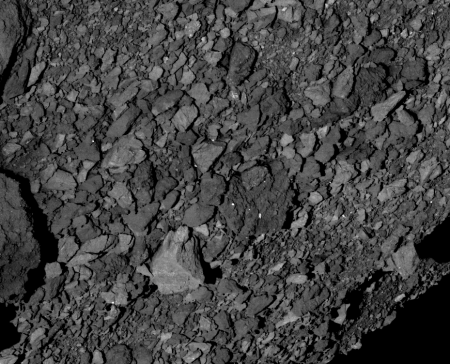
It’ll only touch the surface for a short period of time—about five seconds—which is long enough to collect a sample. It collects a sample by blowing nitrogen gas onto the regolith, sending fine-grained material above the surface, to be captured by TAGSAM. It’ll then measure the amount of material in the sample to see if it’s enough. NASA wants to collect a 60 gram (2.1 oz.) sample.
NASA has a novel method of weighing the sample. Once they’ve collected a sample they’ll fire the thrusters to back away from Bennu. Then, with the TAGSAM extended, they’ll spin the spacecraft. They’ll measure the inertia and compare it to a previous spin with the TAGSAM extended, but empty.
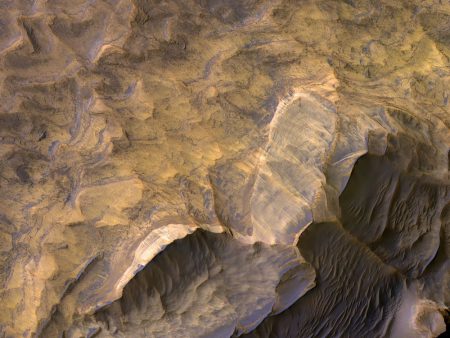
Cruising Mars (eat your heart out, Spielberg) . . .
And cruising comets . . .
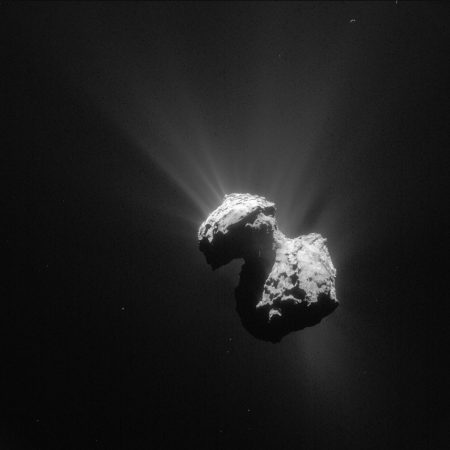
Rosetta was launched in 2004 and took 10 years to reach its target, Comet 67P. It spent about two years studying it before ending its mission by crashing into the comet. Rosetta also dispatched the lander Philae to the surface, and in spite of a difficult landing that crippled its mission, the lander was still able to take images from the comet’s surface.
That comet photo – “You can’t take the sky from me “
NASA has a novel method of weighing the sample.
… they’ll spin the spacecraft. They’ll measure the inertia and compare it to a previous spin…
Ummmmm, novel?
I will say I’m surprised that NASA is using physics but it’s not novel. It’s, what’s the word? Standard. Yeah, that’s it.