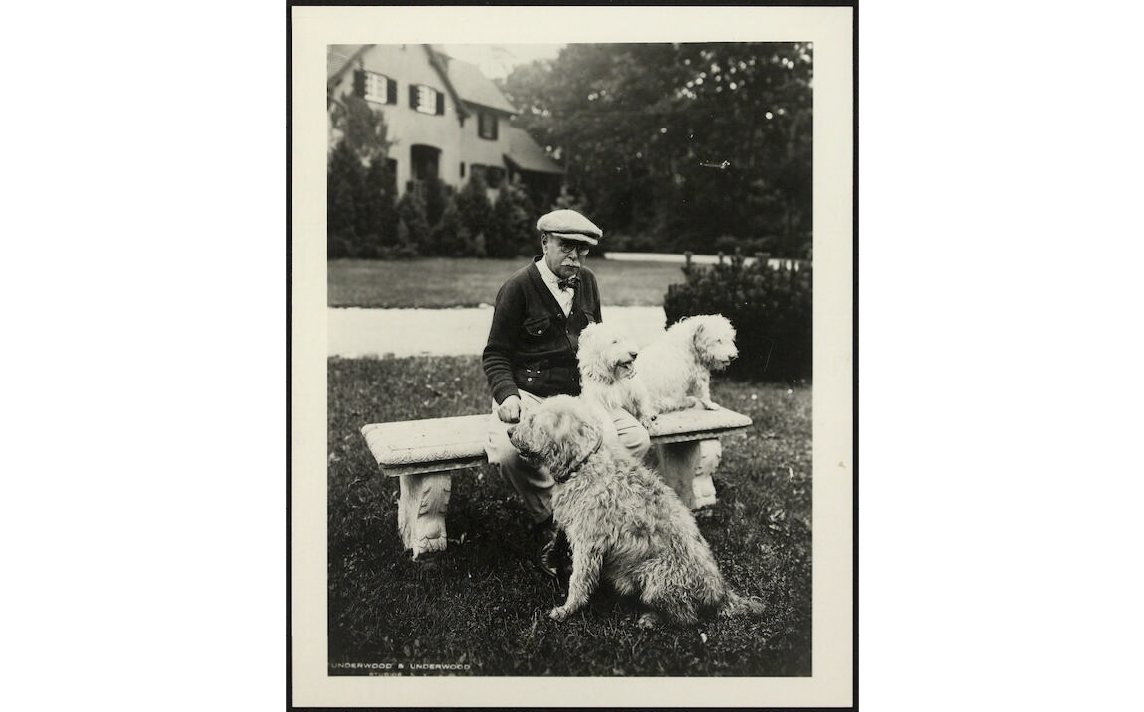
The History Guy is one of my favorite YouTube channels.
Do you have something you’d like to share? A link? A joke? Some words of wisdom? A topic to discuss? It’s our nightly Open Thread, and you have the floor.
The History Guy is one of my favorite YouTube channels.
Do you have something you’d like to share? A link? A joke? Some words of wisdom? A topic to discuss? It’s our nightly Open Thread, and you have the floor.
I only own a couple of these.
Do you have something you’d like to share? A link? A joke? Some words of wisdom? A topic to discuss? It’s our nightly Open Thread, and you have the floor.
If you want to argue with someone in the south, and have some serious, could wind up on the news type of arguments, take contrary stands on college football, or on how to do barbecue.
Do you have something you’d like to share? A link? A joke? Some words of wisdom? A topic to discuss? It’s our nightly Open Thread, and you have the floor.
On December 8, 1776, Thomas Paine (while serving with General Greene in the retreat from New York) arrived in Philadelphia. “In what I may call a passion of patriotism,” he remembered, he “wrote the first number of the Crisis.”
This was to be the first in a series of 18 essays collectively called “The American Crisis,” Paine’s major writing effort for the remainder of the war. They were printed at his own expense. He turned over all profits to the American cause.
“Crisis One” is familiar: it begins “These are the times that try men’s souls….” Some say that his invigorating words carried the day for Washington’s troops in Trenton on Christmas Day.
It was in “Crisis Two” that Paine wrote the phrase “The United States of America” for the first time in history. It quickly caught on.
–Jack Fruchtman, Jr., Thomas Paine: Apostle of Freedom
On the 244th birthday of our country, this is a good time to re-read this document:
IN CONGRESS, July 4, 1776.
The unanimous Declaration of the thirteen united States of America,
When in the Course of human events, it becomes necessary for one people to dissolve the political bands which have connected them with another, and to assume among the powers of the earth, the separate and equal station to which the Laws of Nature and of Nature’s God entitle them, a decent respect to the opinions of mankind requires that they should declare the causes which impel them to the separation.
We hold these truths to be self-evident, that all men are created equal, that they are endowed by their Creator with certain unalienable Rights, that among these are Life, Liberty and the pursuit of Happiness.–That to secure these rights, Governments are instituted among Men, deriving their just powers from the consent of the governed, –That whenever any Form of Government becomes destructive of these ends, it is the Right of the People to alter or to abolish it, and to institute new Government, laying its foundation on such principles and organizing its powers in such form, as to them shall seem most likely to effect their Safety and Happiness. Prudence, indeed, will dictate that Governments long established should not be changed for light and transient causes; and accordingly all experience hath shewn, that mankind are more disposed to suffer, while evils are sufferable, than to right themselves by abolishing the forms to which they are accustomed. But when a long train of abuses and usurpations, pursuing invariably the same Object evinces a design to reduce them under absolute Despotism, it is their right, it is their duty, to throw off such Government, and to provide new Guards for their future security.–Such has been the patient sufferance of these Colonies; and such is now the necessity which constrains them to alter their former Systems of Government. The history of the present King of Great Britain is a history of repeated injuries and usurpations, all having in direct object the establishment of an absolute Tyranny over these States. To prove this, let Facts be submitted to a candid world.
He has refused his Assent to Laws, the most wholesome and necessary for the public good.
He has forbidden his Governors to pass Laws of immediate and pressing importance, unless suspended in their operation till his Assent should be obtained; and when so suspended, he has utterly neglected to attend to them.
He has refused to pass other Laws for the accommodation of large districts of people, unless those people would relinquish the right of Representation in the Legislature, a right inestimable to them and formidable to tyrants only.
He has called together legislative bodies at places unusual, uncomfortable, and distant from the depository of their public Records, for the sole purpose of fatiguing them into compliance with his measures.
He has dissolved Representative Houses repeatedly, for opposing with manly firmness his invasions on the rights of the people.
He has refused for a long time, after such dissolutions, to cause others to be elected; whereby the Legislative powers, incapable of Annihilation, have returned to the People at large for their exercise; the State remaining in the mean time exposed to all the dangers of invasion from without, and convulsions within.
He has endeavoured to prevent the population of these States; for that purpose obstructing the Laws for Naturalization of Foreigners; refusing to pass others to encourage their migrations hither, and raising the conditions of new Appropriations of Lands.
He has obstructed the Administration of Justice, by refusing his Assent to Laws for establishing Judiciary powers.
He has made Judges dependent on his Will alone, for the tenure of their offices, and the amount and payment of their salaries.
He has erected a multitude of New Offices, and sent hither swarms of Officers to harrass our people, and eat out their substance.
He has kept among us, in times of peace, Standing Armies without the Consent of our legislatures.
He has affected to render the Military independent of and superior to the Civil power.
He has combined with others to subject us to a jurisdiction foreign to our constitution, and unacknowledged by our laws; giving his Assent to their Acts of pretended Legislation:
For Quartering large bodies of armed troops among us:
For protecting them, by a mock Trial, from punishment for any Murders which they should commit on the Inhabitants of these States:
For cutting off our Trade with all parts of the world:
For imposing Taxes on us without our Consent:
For depriving us in many cases, of the benefits of Trial by Jury:
For transporting us beyond Seas to be tried for pretended offences
For abolishing the free System of English Laws in a neighbouring Province, establishing therein an Arbitrary government, and enlarging its Boundaries so as to render it at once an example and fit instrument for introducing the same absolute rule into these Colonies:
For taking away our Charters, abolishing our most valuable Laws, and altering fundamentally the Forms of our Governments:
For suspending our own Legislatures, and declaring themselves invested with power to legislate for us in all cases whatsoever.
He has abdicated Government here, by declaring us out of his Protection and waging War against us.
He has plundered our seas, ravaged our Coasts, burnt our towns, and destroyed the lives of our people.
He is at this time transporting large Armies of foreign Mercenaries to compleat the works of death, desolation and tyranny, already begun with circumstances of Cruelty & perfidy scarcely paralleled in the most barbarous ages, and totally unworthy the Head of a civilized nation.
He has constrained our fellow Citizens taken Captive on the high Seas to bear Arms against their Country, to become the executioners of their friends and Brethren, or to fall themselves by their Hands.
He has excited domestic insurrections amongst us, and has endeavoured to bring on the inhabitants of our frontiers, the merciless Indian Savages, whose known rule of warfare, is an undistinguished destruction of all ages, sexes and conditions.In every stage of these Oppressions We have Petitioned for Redress in the most humble terms: Our repeated Petitions have been answered only by repeated injury. A Prince whose character is thus marked by every act which may define a Tyrant, is unfit to be the ruler of a free people.
Nor have We been wanting in attentions to our Brittish brethren. We have warned them from time to time of attempts by their legislature to extend an unwarrantable jurisdiction over us. We have reminded them of the circumstances of our emigration and settlement here. We have appealed to their native justice and magnanimity, and we have conjured them by the ties of our common kindred to disavow these usurpations, which, would inevitably interrupt our connections and correspondence. They too have been deaf to the voice of justice and of consanguinity. We must, therefore, acquiesce in the necessity, which denounces our Separation, and hold them, as we hold the rest of mankind, Enemies in War, in Peace Friends.
We, therefore, the Representatives of the united States of America, in General Congress, Assembled, appealing to the Supreme Judge of the world for the rectitude of our intentions, do, in the Name, and by Authority of the good People of these Colonies, solemnly publish and declare, That these United Colonies are, and of Right ought to be Free and Independent States; that they are Absolved from all Allegiance to the British Crown, and that all political connection between them and the State of Great Britain, is and ought to be totally dissolved; and that as Free and Independent States, they have full Power to levy War, conclude Peace, contract Alliances, establish Commerce, and to do all other Acts and Things which Independent States may of right do. And for the support of this Declaration, with a firm reliance on the protection of divine Providence, we mutually pledge to each other our Lives, our Fortunes and our sacred Honor.
Georgia:
Button Gwinnett
Lyman Hall
George WaltonNorth Carolina:
William Hooper
Joseph Hewes
John PennSouth Carolina:
Edward Rutledge
Thomas Heyward, Jr.
Thomas Lynch, Jr.
Arthur MiddletonMassachusetts:
John HancockMaryland:
Samuel Chase
William Paca
Thomas Stone
Charles Carroll of CarrolltonVirginia:
George Wythe
Richard Henry Lee
Thomas Jefferson
Benjamin Harrison
Thomas Nelson, Jr.
Francis Lightfoot Lee
Carter BraxtonPennsylvania:
Robert Morris
Benjamin Rush
Benjamin Franklin
John Morton
George Clymer
James Smith
George Taylor
James Wilson
George RossDelaware:
Caesar Rodney
George Read
Thomas McKeanNew York:
William Floyd
Philip Livingston
Francis Lewis
Lewis MorrisNew Jersey:
Richard Stockton
John Witherspoon
Francis Hopkinson
John Hart
Abraham ClarkNew Hampshire:
Josiah Bartlett
William WhippleMassachusetts:
Samuel Adams
John Adams
Robert Treat Paine
Elbridge GerryRhode Island:
Stephen Hopkins
William ElleryConnecticut:
Roger Sherman
Samuel Huntington
William Williams
Oliver WolcottNew Hampshire:
Matthew Thornton
You know what? We shouldn’t limit our reading — or understanding — of this document for anniversaries such as today.
Waterloo. It’s always nice when you learn a little more than you knew before. This taught me a little more.
Do you have something you’d like to share? A link? A joke? Some words of wisdom? A topic to discuss? It’s our nightly Open Thread, and you have the floor.
This Week in History – June 19, 1865 – Juneteenth
Jesús Vico and Marisa Ollero / VCoins.com / June 19, 2020
Juneteenth (a portmanteau of June and nineteenth; also known as Freedom Day) is an unofficial American holiday and an official Texas state holiday, celebrated annually on the 19th of June in the United States to commemorate Union army general Gordon Granger announcing federal orders in the city of Galveston, Texas, on June 19, 1865, proclaiming that all slaves in Texas were now free.
Although the Emancipation Proclamation had formally freed them almost two and a half years earlier and the American Civil War had largely ended with the defeat of the Confederate States in April, Texas was the most remote of the slave states, with a low presence of Union troops, so enforcement of the proclamation had been slow and inconsistent.
Although this day marks the emancipation of all slaves in the Confederacy, the institution of slavery was still legal and existed in the Union border states after June 19, 1865. Slavery in the United States did not officially end until the ratification of the Thirteenth Amendment to the Constitution of the United States on December 6, 1865, which abolished slavery entirely in all of the U.S. states and territories.
During the American Civil War, President Abraham Lincoln issued the preliminary Emancipation Proclamation on September 22, 1862. It was formally issued on January 1, 1863, declaring that all enslaved persons in the Confederate States of America in rebellion and not in Union hands were to be freed.
More isolated geographically, planters and other slaveholders had migrated into Texas from eastern states to escape the fighting, and many brought enslaved people with them, increasing by the thousands the enslaved population in the state at the end of the Civil War. Although most lived in rural areas, more than 1,000 resided in both Galveston and Houston by 1860, with several hundred in other large towns. By 1865, there were an estimated 250,000 enslaved people in Texas.
Yikes!
The news of General Robert E. Lee’s surrender on April 9, 1865, reached Texas later in the month. The western Army of the Trans-Mississippi did not surrender until June 2. On June 18, Union Army General Gordon Granger arrived at Galveston Island with 2,000 federal troops to occupy Texas on behalf of the federal government. The following day, standing on the balcony of Galveston’s Ashton Villa, Granger read aloud the contents of “General Order No. 3”, announcing the total emancipation of those held as slaves:
“The people of Texas are informed that, in accordance with a proclamation from the Executive of the United States, all slaves are free. This involves an absolute equality of personal rights and rights of property between former masters and slaves, and the connection heretofore existing between them becomes that between employer and hired labor. The freedmen are advised to remain quietly at their present homes and work for wages. They are informed that they will not be allowed to collect at military posts and that they will not be supported in idleness either there or elsewhere.”
Although this event is popularly thought of as “the end of slavery”, the Emancipation Proclamation did not apply to those enslaved in Union-held territory, who would not be freed until a proclamation several months later, on December 18, 1865, that the Thirteenth Amendment had been ratified on December 6, 1865. The freedom of formerly enslaved people in Texas was given legal status in a series of Texas Supreme Court decisions between 1868 and 1874.
Celebrations date to 1866, at first involving church-centered community gatherings in Texas. It spread across the South and became more commercialized in the 1920s and 1930s, often centering on a food festival.
During the Civil Rights movement of the 1960s, it was eclipsed by the struggle for postwar civil rights, but grew in popularity again in the 1970s with a focus on African American freedom and arts. By the 21st century, Juneteenth was celebrated in most major cities across the United States.
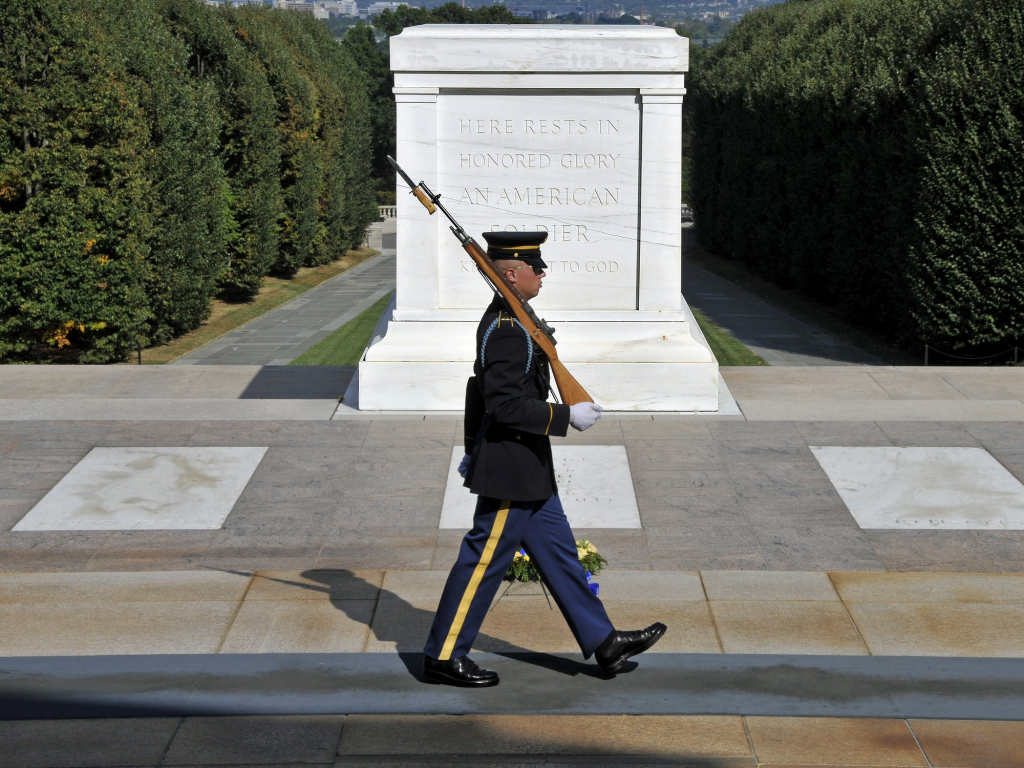
Issued on: May 21, 2020
Since the first shots fired in the Revolutionary War, Americans have answered the call to duty and given their lives in service to our Nation and its sacred founding ideals. As we pay tribute to the lives and legacies of these patriots on Memorial Day, we also remember that they sacrificed to create a better, more peaceful future for our Nation and the world. We recommit to realizing that vision, honoring the service of so many who have placed love of country above all else.
As Americans, we will always defend our freedom and our liberty. When those principles are threatened, we will respond with uncompromising force and unparalleled vigor. Generation after generation, our country’s finest have defended our Republic with honor and distinction. Memorials, monuments, and rows of white crosses and stars in places close to home like Arlington, Virginia and Gettysburg, Pennsylvania, as well as far-flung battlefields in places like Flanders Field in Belgium and Busan in Korea, will forever memorialize their heroic actions, standing as solemn testaments to the price of freedom. We will never take for granted the blood shed by these gallant men and women, as we are forever indebted to them and their families.
This year marks the 75th anniversary of the Allied victories over Nazi Germany and Imperial Japan in World War II. As we commemorate these seminal events, we also remember the tremendous cost at which these victories came. More than 400,000 souls of the Greatest Generation perished during this titanic struggle to liberate the world from tyranny. In his address to the Nation on Japan’s surrender, President Truman’s words remind us all of our enduring obligation to these patriots for their sacrifice: “It is our responsibility — ours the living — to see to it that this victory shall be a monument worthy of the dead who died to win it.” As we pause to recall the lives lost from the ranks of our Armed Forces, we remain eternally grateful for the path they paved toward a world made freer from oppression.
Our fallen warriors gave their last breath for our country and our freedom. Today, let us pause in quiet reverence to reflect on the incredible dedication of these valiant men and women and their families, invoking divine Providence as we continue pursuing our noble goal of lasting peace for the world.
In honor and recognition of all of our fallen heroes, the Congress, by a joint resolution approved May 11, 1950, as amended (36 U.S.C. 116), has requested the President issue a proclamation calling on the people of the United States to observe each Memorial Day as a day of prayer for permanent peace and designating a period on that day when the people of the United States might unite in prayer. The Congress, by Public Law 106-579, has also designated 3:00 p.m. local time on that day as a time for all Americans to observe, in their own way, the National Moment of Remembrance.
NOW, THEREFORE, I, DONALD J. TRUMP, President of the United States of America, do hereby proclaim Memorial Day, May 25, 2020, as a day of prayer for permanent peace, and I designate the hour beginning in each locality at 11:00 a.m. of that day as a time when people might unite in prayer.
I further ask all Americans to observe the National Moment of Remembrance beginning at 3:00 p.m. local time on Memorial Day.
I also request the Governors of the United States and its Territories, and the appropriate officials of all units of government, to direct that, on Memorial Day, the flag be flown at half-staff until noon on all buildings, grounds, and naval vessels throughout the United States and in all areas under its jurisdiction and control. I also request the people of the United States to display the flag at half-staff from their homes for the customary forenoon period.
IN WITNESS WHEREOF, I have hereunto set my hand this twenty-first day of May, in the year of our Lord two thousand twenty, and of the Independence of the United States of America the two hundred and forty-fourth.
DONALD J. TRUMP
Ashmole …
Heh
… met the botanist and collector John Tradescant the Younger around 1650.
Tradescant had, with his father, built up a vast and renowned collection of exotic plants, mineral specimens and other curiosities from around the world at their house in Lambeth.
Ashmole helped Tradescant catalogue his collection in 1652, and, in 1656, he financed the publication of the catalogue, the Musaeum Tradescantianum.
In 1659, Tradescant, who had lost his only son seven years earlier, legally deeded his collection to Ashmole.
Under the agreement, Ashmole would take possession at Tradescant’s death.
When Tradescant died in 1662, his widow, Hester, contested the deed, claiming her husband had signed it when drunk without knowing its contents, but the matter was settled in Chancery in Ashmole’s favour two years later.
Hester was to hold the collection in trust for Ashmole until her death.
Ashmole’s determined aggressiveness in obtaining the Tradescant collection for himself has led some scholars to consider that Ashmole was an ambitious, ingratiating social climber who stole a hero’s legacy for his own glorification.
In 1677, Ashmole made a gift of the Tradescant Collection, together with material he had collected independently, to the University on the condition that a suitable home be built to house the materials and make them available to the public.
Ashmole had already moved into the house adjacent to the Tradescants’ property in 1674 and had already removed some items from their house into his.
In 1678, in the midst of further legal wrangling over the Tradescant Collection, Hester was found drowned in a garden pond.
By early 1679, Ashmole had taken over the lease of the Tradescant property and began merging his and their collections into one.
The Ashmolean Museum was completed in 1683, and is considered by some to be the first truly public museum in Europe.
The collection filled twelve wagons when it was transferred to Oxford. It would have been more, but a large part of Ashmole’s own collection, destined for the museum, including antiquities, books, manuscripts, prints, and 9,000 coins and medals, was destroyed in a disastrous fire in the Middle Temple on 26 January 1679.
— per vcoins.com
Dude! Chill!
— From Edmund Burke, Reflections on the Revolution in France (1790):
[The paragraph breaks are inserted for easier reading.]
Mr. Hume told me that he had from Rousseau himself the secret of his principles of composition. That acute, though eccentric observer, had perceived, that, to strike and interest the public, the marvellous must be produced;
that the marvellous of the heathen mythology had long since lost its effects;
that giants, magicians, fairies, and heroes of romance, which succeeded, had exhausted the portion of credulity which belonged to their age;
that now nothing was left to a writer but that species of the marvellous which might still be produced, and with as great an effect as ever, though in another way—that is, the marvellous in life, in manners, in characters, and in extraordinary situations, giving rise to new and unlooked-for strokes in politics and morals.
I believe, that, were Rousseau alive, and in one of his lucid intervals, he would be shocked at the practical frenzy of his scholars…
— From Edmund Burke, Reflections on the Revolution in France (1790):
… how little you seem to know of us. I suspect that this is owing to your forming a judgment of this nation from certain publications, which do, very erroneously, if they do at all, represent the opinions and dispositions generally prevalent [in our country]. The vanity, restlessness, petulance, and spirit of intrigue of several petty cabals
[Could have said “cables”]
who attempt to hide their total want of consequence in bustle and noise, and puffing and mutual quotation of each other, makes you imagine that our contemptuous neglect of their abilities is a general mark of acquiescence in their opinions. No such thing, I assure you. Because half a dozen grasshoppers under a fern make the field ring with their importunate chink, whilst thousands of great cattle reposed beneath the shadow of the … oak chew the cud and are silent, pray do not imagine that those who make the noise are the only inhabitants of the field,—that, of course, they are many in number,—or that, after all, they are other than the little, shrivelled, meagre, hopping, though loud and troublesome insects of the hour.
A long tweet, but there was no character limit back then. And he had tons of it!