
The First Victorian Christmas Trees
December 15, 2020 | John Rabon | anglotopia.netComing originally from Germany, there is speculation about how it got started as a decoration. Stories have it that reformist Martin Luther created the first Christmas tree when he placed candles on an evergreen tree in 1536. Luther walked out of his home in Wittenberg one night in December and saw the stars twinkling through the tree branches and thought they looked like candles. He then placed candles on an evergreen as a symbol to remind his children of Christ coming down from the heavens to become one of us.
The first documented representation of a Christmas tree was on the cornerstone of a private home in Turckheim, Alsace (part of modern-day France) in 1576.
Over time, the popularity of the Christmas tree spread across Germany. While most people think it didn’t come to Britain and the States until the first Christmas that Prince Albert spent with Queen Victoria, he wasn’t actually the first German spouse of a monarch to do so. Queen Charlotte, the wife of King George III, was originally from the duchy of Mecklenburg-Strelitz in Germany. In 1800, she placed a Christmas tree in Queen’s Cottage at Kew Palace for her children. This first display of a Christmas tree by the Royal Family didn’t catch on with the public, and it would be a few decades before the practice returned with the next German-born royal consort.
Archive of posts filed under the History category.
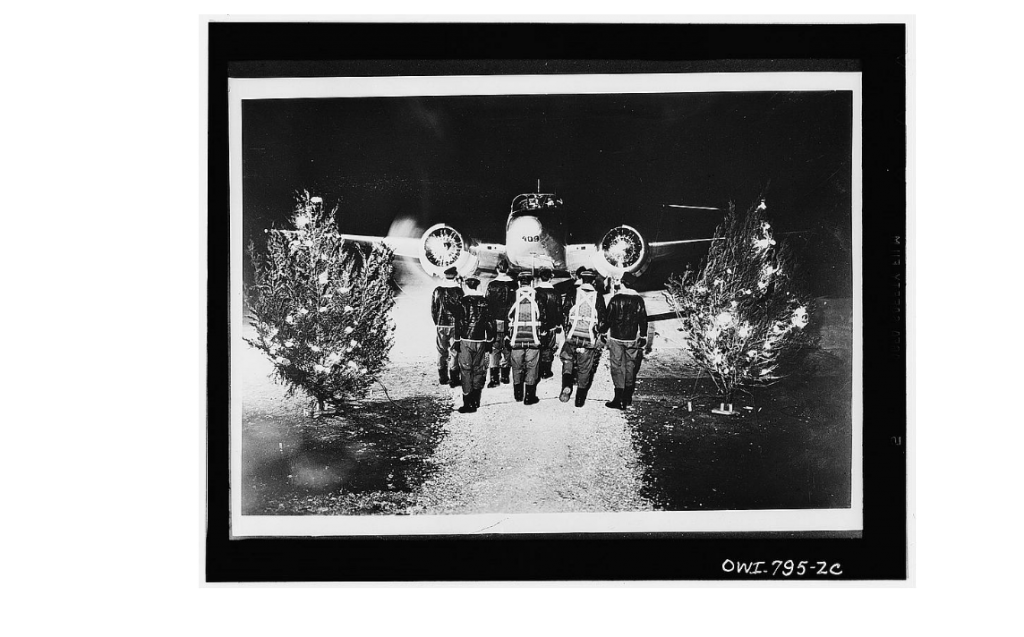
Christmas Eve, World War II
Thanksgiving (2020)
Thanksgiving Proclamation
Issued by President George Washington, at the request of Congress, on October 3, 1789
By the President of the United States of America, a Proclamation.
Whereas it is the duty of all nations to acknowledge the providence of Almighty God, to obey His will, to be grateful for His benefits, and humbly to implore His protection and favor; and—Whereas both Houses of Congress have, by their joint committee, requested me “to recommend to the people of the United States a day of public thanksgiving and prayer, to be observed by acknowledging with grateful hearts the many and signal favors of Almighty God, especially by affording them an opportunity peaceably to establish a form of government for their safety and happiness:”
Now, therefore, I do recommend and assign Thursday, the 26th day of November next, to be devoted by the people of these States to the service of that great and glorious Being who is the beneficent author of all the good that was, that is, or that will be; that we may then all unite in rendering unto Him our sincere and humble thanks for His kind care and protection of the people of this country previous to their becoming a nation; for the signal and manifold mercies and the favor, able interpositions of His providence in the course and conclusion of the late war; for the great degree of tranquillity, union, and plenty which we have since enjoyed; for the peaceable and rational manner in which we have been enabled to establish constitutions of government for our safety and happiness, and particularly the national one now lately instituted; for the civil and religious liberty with which we are blessed, and the means we have of acquiring and diffusing useful knowledge; and, in general, for all the great and various favors which He has been pleased to confer upon us.
And also that we may then unite in most humbly offering our prayers and supplications to the great Lord and Ruler of Nations, and beseech Him to pardon our national and other trangressions; to enable us all, whether in public or private stations, to perform our several and relative duties properly and punctually; to render our National Government a blessing to all the people by constantly being a Government of wise, just, and constitutional laws, discreetly and faithfully executed and obeyed; to protect and guide all sovereigns and nations (especially such as have shown kindness to us), and to bless them with good governments, peace, and concord; to promote the knowledge and practice of true religion and virtue, and the increase of science among them and us; and, generally, to grant unto all mankind such a degree of temporal prosperity as He alone knows to be best.
Given under my hand at the City of New York the third day of October in the year of our Lord 1789.
Go. Washington
Monday Night Open Thread
I think the whole world has gone bananas. Partially because we don’t learn from history.
Do you have something you’d like to share? A link? A joke? Some words of wisdom? A topic to discuss? It’s our nightly Open Thread, and you have the floor.
Monday Night Open Thread
I love history.
Do you have something you’d like to share? A link? A joke? Some words of wisdom? A topic to discuss? It’s our nightly Open Thread, and you have the floor.
Monday Night Open Thread
History is interesting.
Do you have something you’d like to share? A link? A joke? Some words of wisdom? A topic to discuss? It’s our nightly Open Thread, and you have the floor.
This Day in History
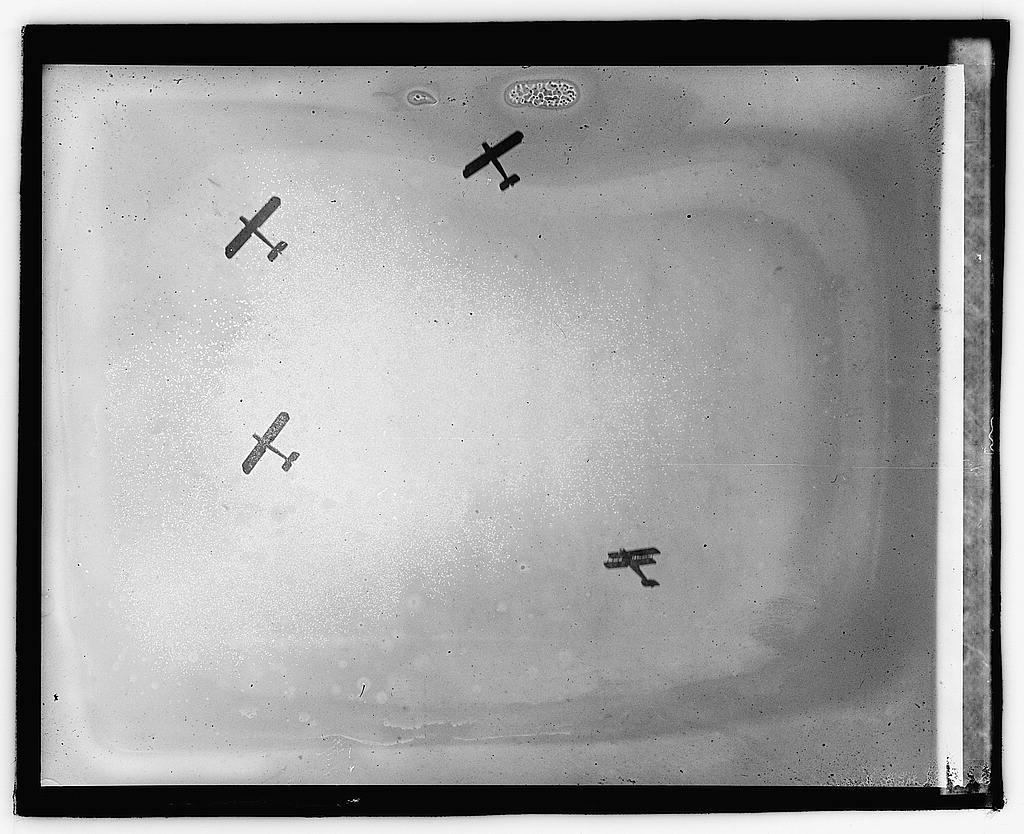
100 years ago today:
Dagnabbit! IMAO Always Finds Out About These Things Ten Days Too Late!
Full disclosure: I am not of German descent, but I find this to be history that may be lost.
German-American Day is a holiday in the United States, observed annually on October 6.
It celebrates German-American heritage and commemorates the founding of Germantown in 1683.
Germantown (PA) has played a significant role in American history; it was the birthplace of the American antislavery movement, the site of a Revolutionary War battle, the temporary residence of George Washington, the location of the first bank of the United States, and the residence of many notable politicians, scholars, artists, and social activists.
Today the area remains rich in historic sites and buildings from the colonial era, some of which are open to the public.
Fuller disclosure: the next paragraph is not altogether clear, so it’s best to just ignore it and read on.
Although the founding of Germantown on October 6, 1683 was later to provide the date for German-American Day, a holiday in the United States, observed annually on October 6, historical research has shown that nearly all of the first thirteen Quaker and Mennonite families were a people who had fled the territory of modern-day Netherlands due to religious persecution and settled in the area of modern-day Germany, only to relocate once again to what would become the United States.
There is some debate as to whether these people were Dutch rather than German. In any case, the direct vicinity of the settlement was inhabited by fifty-four German families who had accompanied Johan Printz to the Swedish settlement on the Delaware several years earlier and had resettled themselves.
In 1688, five years after its founding, Germantown became the birthplace of the anti-slavery movement in America.
So, when do we hear of “The 1688 Project”?
Pastorius, Gerret Hendericks, Derick Updegraeff and Abraham Updengraef gathered at Thones Kunders’s house and wrote a two-page condemnation of slavery and sent it to the governing bodies of their Quaker church, the Society of Friends.
The petition was mainly based upon the Bible’s Golden Rule, “Do unto others as you would have them do unto you.”
Though the Quaker establishment took no immediate action, the 1688 Germantown Quaker Petition Against Slavery was a clear and forceful argument against slavery and initiated the process of banning slavery in the Society of Friends (1776) and Pennsylvania (1780).
When Philadelphia was occupied by the British during the American Revolutionary War, British units were housed in Germantown.
In the Battle of Germantown, on October 4, 1777, the Continental Army attacked this garrison.
The American loss was 673 and the British loss was 575, but along with the Army’s success under Brigadier General Horatio Gates at Saratoga on October 17 when John Burgoyne surrendered, the battle led to the official recognition of the Americans by France, which formed an alliance with the Americans afterward.
France’s commitment was absolutely key, of course. Most history books only mention the Battle of Saratoga as an influence on French opinion. The Germantown battle may be too overlooked.
During his presidency, George Washington and his family lodged at the Deshler-Morris House in Germantown to escape the city and the yellow fever epidemic of 1793.
Without masks.
The first bank of the United States was also located here during his administration. Germantown proper, and the adjacent German Township, were incorporated into the City of Philadelphia in 1854 by the Act of Consolidation.
Originally known under the rubric of “German Day”, the holiday was celebrated for the first time in Philadelphia in 1883, on the occasion of the 200th anniversary of the founding; and similar celebrations developed later in other parts of the country.
The custom died out during World War I as a result of the anti-German sentiment that prevailed at the time, but the holiday was revived in 1983.
Monday Night Open Thread
I do so love history.
Do you have something you’d like to share? A link? A joke? Some words of wisdom? A topic to discuss? It’s our nightly Open Thread, and you have the floor.
Welcome Home. Thank You So Much!

He Is Now Home, 70 Years After Being Listed as MIA in the Korean War
Sept. 10, 2020 / Craig Bowman / War History Online
Cpl. Hash was enlisted as a member of the US Armed Forces during the Korean War. He was assigned to Army Headquarters Battery, 57th Field Artillery Battalion, 7th Infantry Division. He went missing during the Battle of Chosin Reservoir.
The Battle of Chosin Reservoir was one of the bloodiest battles of the Korean War. It took place between November and December of 1950. In this 17-day battle, an estimated 30,000 troops belonging to the US, Britain, and the Republic of Korea (South Korean), were attacked by over 100,000 Chinese soldiers.
The battle took place amid a brutal winter where temperatures regularly dipped to 25 degrees below zero, accompanied by biting wind and snow.
Over 100,000 Allied troops died in this battle, and a further 5,000 were listed as missing in action. At the time of the war, Corporal Hash was 18 years old. On the 6th December 1950, he was reported missing in action and was presumed dead on the 31st December 1953.
Must’ve Been Some Cat
The Dickin Medal is the animal equivalent of the Victoria Cross. It is the highest honor a military animal can receive.
It is a large bronze medallion inscribed with the words “For Gallantry” and “We Also Serve” in a laurel wreath. The ribbon has green, dark brown, and sky blue stripes which represent water, earth, and air for the naval, land and air forces of the British military.
The medal is named after Maria Dickin, who founded the PDSA in 1943. It is the highest honor any animal can receive while serving the British military in conflict.
To date, the award has been bestowed upon 34 dogs, 32 WWII messenger pigeons, 4 horses and one cat.

Rip the terrier received the Dickin Medal in 1945 for locating people trapped under rubble during the Blitz, saving over 100 lives.
Monday Night Open Thread
I was fascinated by the game of chess before I learned how to play. Then, one day, I taught myself the rules. Well, mostly. I got them mostly right. But I eventually learned all the rules. And I’ve continued to love the game this whole time.
Do you have something you’d like to share? A link? A joke? Some words of wisdom? A topic to discuss? It’s our nightly Open Thread, and you have the floor.
And Sometimes Black Lives Matter To An Exceptional Degree

Monday Night Open Thread
I fell into a “Billy the Kid” rabbit hole on the Internet this past weekend, and found some videos and interviews that had information I hadn’t heard before.
For instance, did you know that Billy the Kid sometimes wore a dress? That, a new version of details of the killing, a new reason for it, and a few other tidbits were gleaned from a pair of videos I saw.
How much truth to them? Dunno. The person interviewed is the grandson of a man who was at the Pete Maxwell ranch on July 14, 1881, and helped bury Billy the Kid, so if the grandfather told his grandson the truth, and if the grandson (the interviewee) remembers it correctly, this is something I hadn’t previously heard. And, it actually fits — or at least doesn’t not fit — with items that are not in dispute.
Here’s the short version of the interview, which I found interesting.
If you want the full version, which includes a lot of stuff not related to the infamous Henry McCarty AKA Billy the Kid, you can see that here. It’s interesting in other ways, but takes over an hour.
Do you have something you’d like to share? A link? A joke? Some words of wisdom? A topic to discuss? It’s our nightly Open Thread, and you have the floor.
Monday Night Open Thread
Now that it seems people are tired of this Coronavirus thing, it’s probably time for a new plague of some kind. Not that I’m trying to give folks any ideas, but it would probably be a good idea to keep an eye out for something like this.
Do you have something you’d like to share? A link? A joke? Some words of wisdom? A topic to discuss? It’s our nightly Open Thread, and you have the floor.