
Well we have hit complications. I started the motorized Panther.
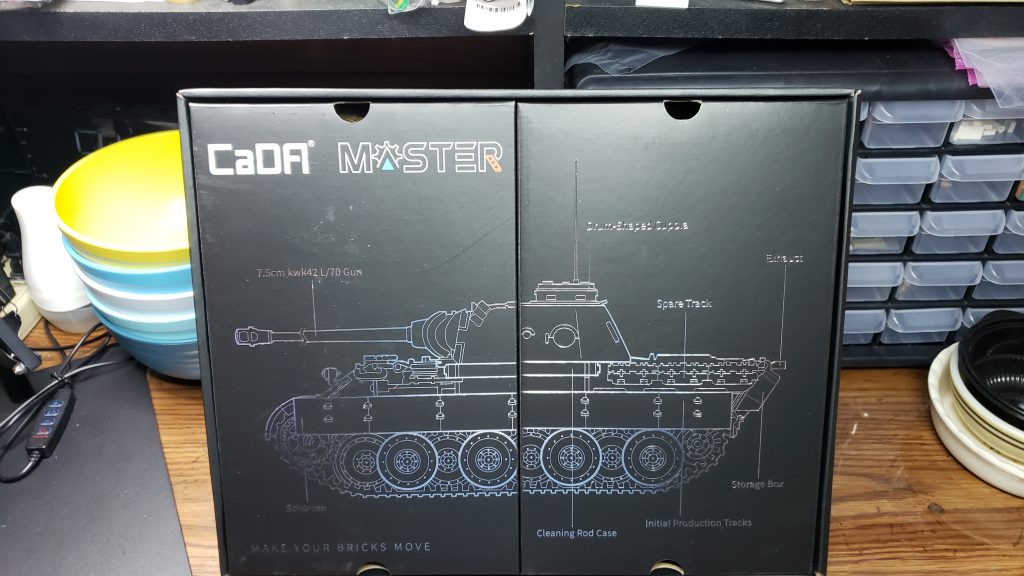
Got started and things proceeded fairly easily up to this point.
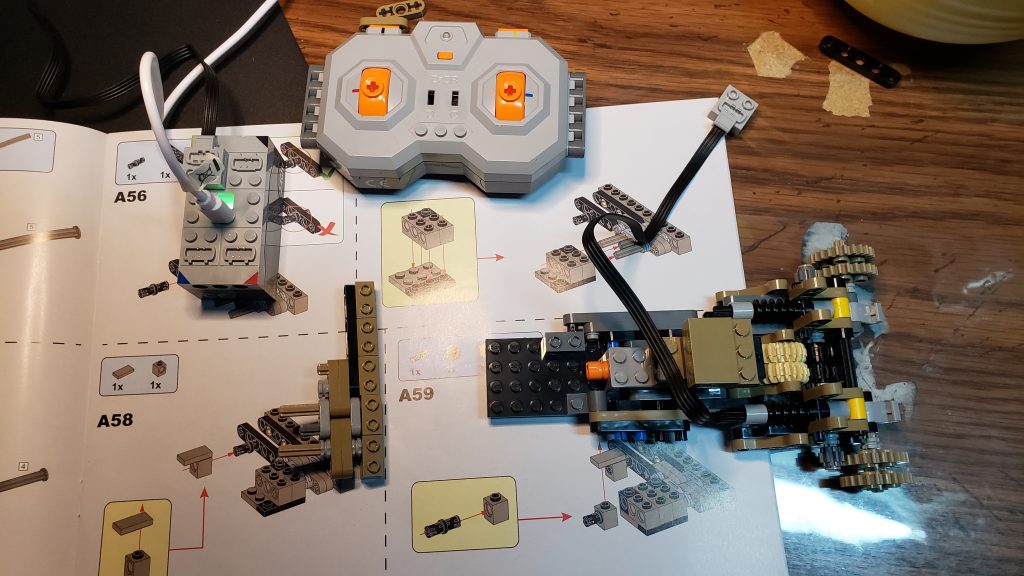
It was then I found I was missing a part. Since it was a unique one I could not replace with my spares I had to stop. Now, with a Cobi set this would be no real problem as they are pretty good at replacing parts although it takes a little while for them to come from Poland. Yes, these sets are produced in Poland. The CadFi sets though are made in China and it is unclear what kind of “Proof of Puchase” they need to be able to send me a part. Also coming from China I can’t predict how long that will take so I switch to my other waiting builds. I got two done which you’ll see in the previous builds section. I am now working on this.
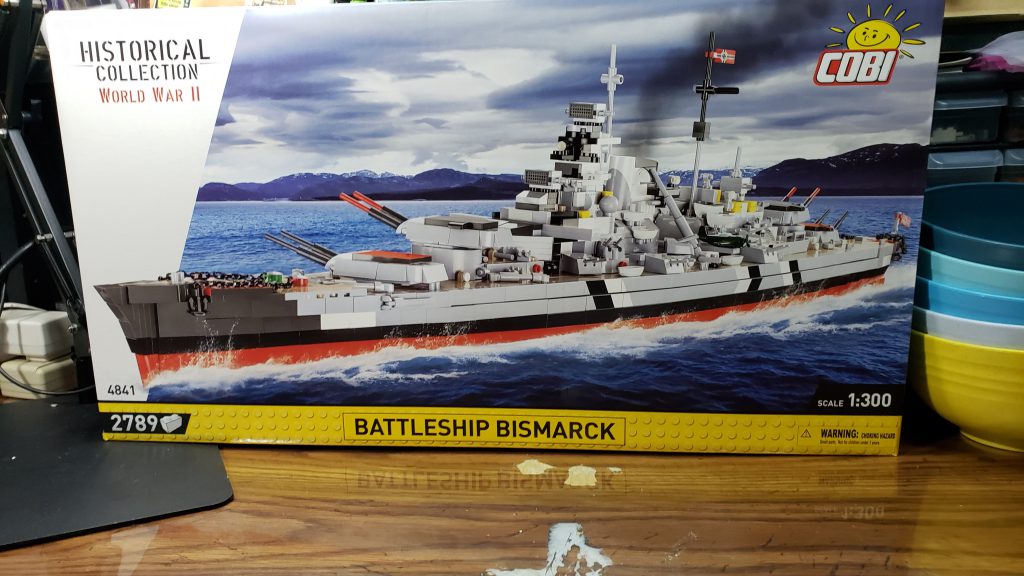
I have part of the hull done and the work continues. I hope everyone is ready to enjoy a Merry Christmas and a Happy New Year.
Previous Builds
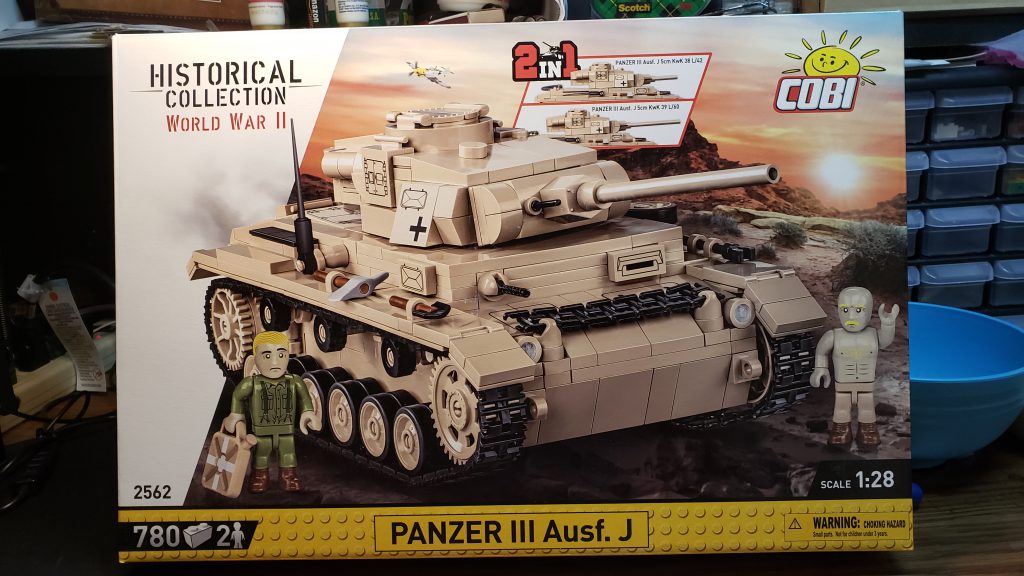
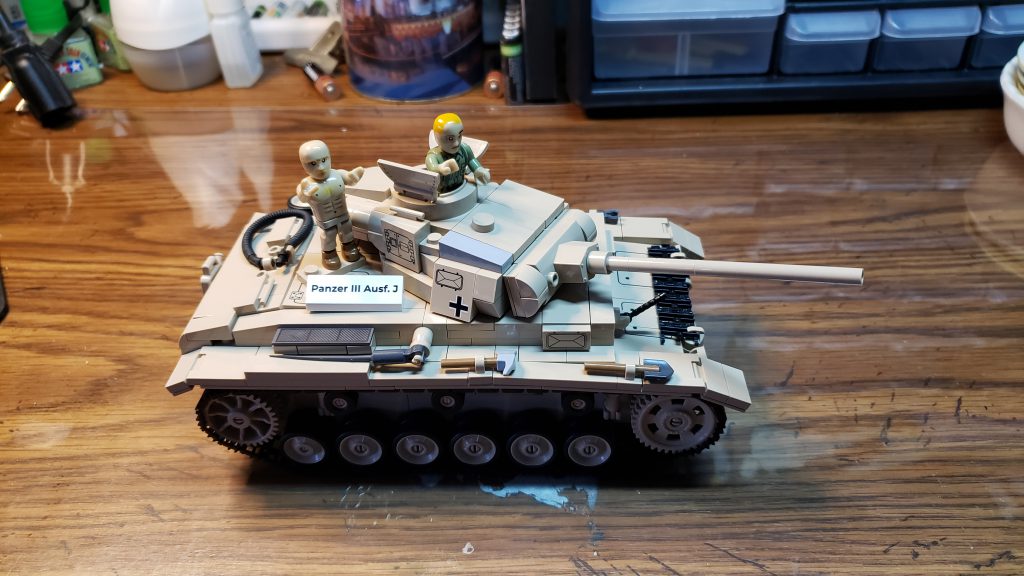
Panzer III Ausf. J
The Panzerkampfwagen III, commonly known as the Panzer III, was a medium tank developed in the 1930s by Germany, and was used extensively in World War II. The official German ordnance designation was Sd.Kfz. 141. It was intended to fight other armoured fighting vehicles and serve alongside and support the similar Panzer IV, which was originally designed for infantry support.
Initially the Panzer III had the same 3.7 cm gun as the infantry used for anti-tank work but later models were given 5 cm gun. However, this was the largest gun that could be fitted within the limitations of the turret ring and it was insufficient against Soviet T-34 and KV-1 tanks. Instead the Panzer IV which had a larger turret ring, was redesigned to mount the long-barrelled 7.5 cm KwK 40 gun and became the main German tank. The Panzer III effectively swapped roles with the Panzer IV; from 1942 the last version of the Panzer III (Panzer III N) mounted the short barrelled 7.5 cm KwK 37 L/24 that the first Panzer IVs had been fitted with.
Production of the Panzer III ceased in 1943 but the Sturmgeschütz III assault gun which had been developed from the Panzer III chassis continued in production until the end of the war.
Panzer III Ausf. J – The most common variant of the Panzer III, which served in North Africa and the Eastern Front. Hull and turret front armour increased to solid 50 mm plate. Spaced armour was placed around the gun mantlet. Some were produced with 5 cm KwK 39 L/60 gun and later redesignated Ausf. L.
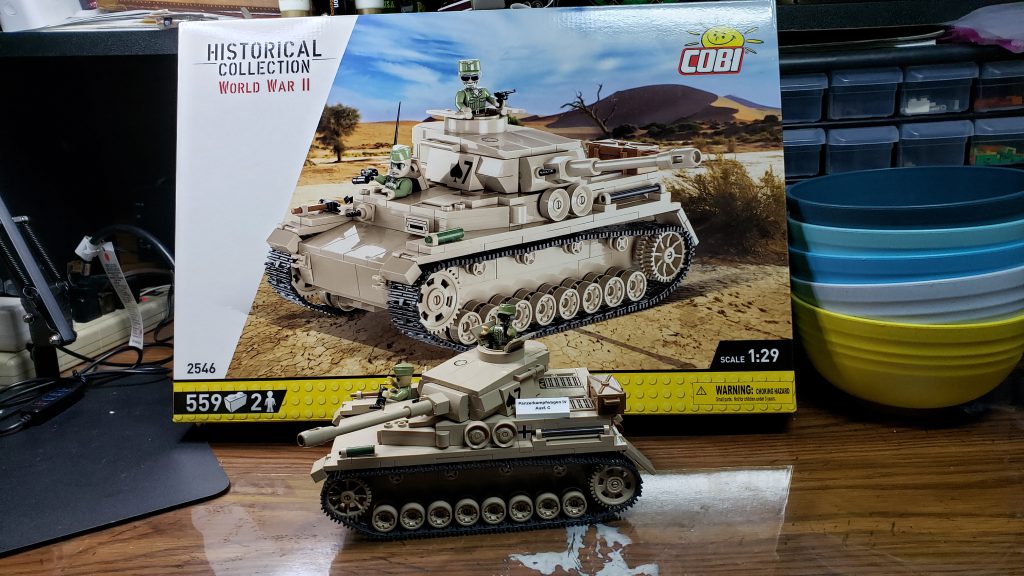
Panzer IV Ausf. G
The Panzerkampfwagen IV (Pz.Kpfw. IV), commonly known as the Panzer IV, is a German medium tank developed in the late 1930s and used extensively during the Second World War. Its ordnance inventory designation was Sd.Kfz. 161.
The Panzer IV was the most numerous German tank and the second-most numerous German fully tracked armoured fighting vehicle of the Second World War; 8,553 Panzer IVs of all versions were built during World War II, only exceeded by the StuG III assault gun with 10,086 vehicles. Its chassis was also used as the base for many other fighting vehicles, including the Sturmgeschütz IV assault gun, the Jagdpanzer IV self-propelled anti-tank gun, the Wirbelwind self-propelled anti-aircraft gun, and the Brummbär self-propelled gun.
The Panzer IV saw service in all combat theatres involving Germany and was the only German tank to remain in continuous production throughout the war. It was originally designed for infantry support, while the similar Panzer III was to fight armoured fighting vehicles. However, as the Germans faced the formidable T-34, the Panzer IV had more development potential, with a larger turret ring to mount more powerful guns, so it swapped roles with the Panzer III whose production wound down in 1943. The Panzer IV received various upgrades and design modifications, intended to counter new threats, extending its service life. Generally, these involved increasing the armour protection or upgrading the weapons, although during the last months of the war, with Germany’s pressing need for rapid replacement of losses, design changes also included simplifications to speed up the manufacturing process.
The Panzer IV was partially succeeded by the Panther medium tank, which was introduced to counter the Soviet T-34, although it continued to be a significant component of German armoured formations to the end of the war. It was the most widely exported tank in German service, with around 300 sold to Finland, Romania, Spain and Bulgaria. After the war, Syria procured Panzer IVs from France and Czechoslovakia, which saw combat in the 1967 Six-Day War.
1,927 produced by Krupp-Gruson, Vomag and Nibelungenwerke from March 1942 to June 1943.
Work in it in tandem with another build. Synch the Bismarck!
I can get the HMS Hood, oh, wait a second…
Work on the ship for awhile, leave it for a bit, then return to it…later you can say you went to hull and back…