♩♪
Goblets, America!
Land that you serve!
Send bursitis,
Anginas,
‘Cause you got
Only what
You deserve.
♩♪
Another new end of the week offering. Trying out a few things. Today’s feature is an interesting bit of news or information that you may not have noticed or seen. I hope you enjoy.
This is for all you drinkers out there. You should pay attention to this, it will not be some thing you will enjoy.
The Incredible Shrinking Liquor Bottle
Link to storyYes my friends they are making them smaller.
The feds have regulated the size of your liquor bottles since the 1930s, when Prohibition was repealed. The U.S. Congress gave the agency that would become the Alcohol and Tobacco Tax and Trade Bureau (TTB) the authority to regulate bottle sizes for two key reasons: To prevent sellers from deceiving consumers by shorting them. And more critically, standard sizes made it easier to track federal taxes companies owed on liquor they sold.
Regulations rolled out in 1934 and 1936 that designated a roster of imperial units that could be used to sell liquor. That included the familiar quart, pint, and fifth (a fifth being a fifth of a gallon), but also oddballs, including a 1/16th pint (that is, an ounce), which was available only for brandy. The feds allowed 38 different bottle sizes.
All well and good so why change?
So why was the 700ml bottle added to the metric family last month? Blame a global coalition. In this case, distillers, distributors and exporters all pressed for allowing new sizes. It wasn’t a new attempt—Washington state, for instance, lobbied for the change back in 1987, arguing that the restrictions on size stifled price competition. The feds didn’t agree back then.
This time, those pushing anew for change argued that the United States had become an isolated island of 750ml bottles amid a sea of 700ml bottles—the standard size most everywhere else in the world. (India is one other significant 750ml island.) So those wanting to export liquor—from either the U.S. to Europe, or vice-versa—had to order two sets of bottles and calibrate their equipment for two separate bottling runs. That was nobody’s idea of frictionless trade.
So the only question is, will prices come down? Well…
If it’s any consolation, shrinking size while maintaining price is a common practice among food products across the board. It even has a name—“shrinkflation”—and it can affect everything from coffee (bags switching from 16 oz to 12 oz) to laundry detergent sizes to tea—a box that once contained 20 bags will remain the same size and price but now holds just 12 bags. It’s a simple way to boost profits without boosting prices.
So let us drink a farewell toast the the 750ml bottle. You will be missed.
Scientists Just Discovered 3 New Kinds of Carnivorous Sponge in The Deep Ocean
sciencealert.com | Jan. 18,2021 | Jacinta Bowler
“Carnivorous sea sponges” still sound like something from a sci-fi movie. And yet, researchers just announced the discovery of three new such species off the coast of Australia.
Out-of-Control Australian Bushfire Threatens Perth Homes
Phys.org | Jan. 16, 2021
“Like Finding Life on Mars”: Why the Underground Orchid Is Australia’s Strangest, Most Mysterious Flower
Phys.org | Dec. 29. 2020
Australia Signals Shift Away From Climate Credit “Cheating”
Phys.org | Nov. 20, 2020Australia’s prime minister said the country may no longer rely on a much-criticised accounting tactic to meet its emissions targets, stepping away from an approach international partners had labelled “cheating”.
Conservative leader Scott Morrison said targets under the Paris climate accord could be met without using so-called “carryover” credits—a mechanism that reduces current emissions on paper but not in the atmosphere.
Do you have something you’d like to share? A link? A joke? Some words of wisdom? A topic to discuss? It’s our nightly Open Thread, and you have the floor.
Biden Cannot Legally Get Us Back Into the Paris Climate Accords; Here’s Why
PJ Media | Jan. 19, 2021 | Matt MargolisJoe Biden has made no secret of his intention to get us back into the Paris climate accords. It’s high up there on his laundry list of things to do upon taking office—even though the United States leads the world in reducing carbon emissions, despite not being a part of it anymore.
But the truth is, the United States was never actually legally a part of the Paris climate accords. The United Nations describes it as “a legally binding international treaty on climate change,” and it also meets the definition of a treaty under the Vienna Convention on the Law of Treaties, which states that a treaty is “an international agreement concluded between [two or more] States in written form and governed by international law.”
And what does the United States Constitution say about treaties?
It says that the president “shall have Power, by and with the Advice and Consent of the Senate, to make Treaties, provided two-thirds of the Senators present concur.” It’s right there in Article II, Section 2, Clause 2.
Yes, Obama unilaterally signed the United States into the treaty in the final months of his presidency, which was a very telling move. Nearly 200 countries signed the treaty on December 12, 2015, but Obama didn’t sign it until nearly a year later, during the final stretch of the 2016 presidential election.
Obama, who fancied himself a constitutional scholar, never even attempted to go to the Senate for ratification. Instead, he avoided referring to the agreement as a treaty publicly, in order to argue that Senate ratification wasn’t constitutionally mandated.
Skolkovo Institute of Science and Technology | 1/18/21
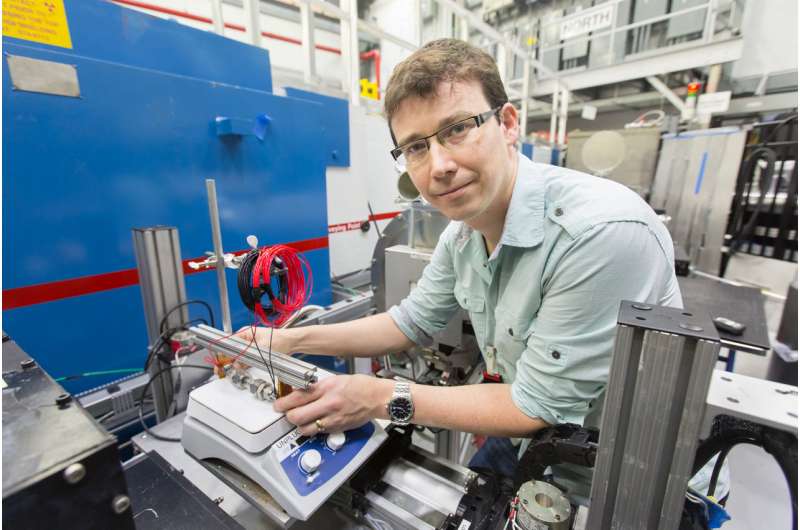
Skoltech scientists and their colleagues from the Russian Quantum Center revealed a significant role of nuclear quantum effects in the polarization of alcohol in an external electric field. Their research findings are published in The Journal of Physical Chemistry.
Does that explain the good-looking babe at the end of the bar?
Oh . . . those would be quandam effects . . .
Gumbeaux, before he naturally disappears, has offered two suggestions:
. . . tell Harris to stop spreading the rumor that Xiden is about to go public with evidence against Hillary . . .
Biden: “God, maybe it’s me, but Kamala’s hair is increasingly smelling like rat poison . . .”
So:
Straight Line of the Day: Our long, national nightmare may soon be over — how will Kamala ditch Biden?

Western Sydney University / Phys.org | Jan 14, 2021
Emu populations are projected to remain stable overall into the future under climate change scenarios, but east of the ranges, populations are likely to be further threatened by increasing urbanization, and increasing losses from feral predators.